Vital to Vietnam’s development, the Internet has the power to transform Vietnamese society; in many ways it already has. In the absence of an independent media, citizens have turned to the Internet to follow the news and debate national issues.
In addition to being a source of information, the Internet is also a potent organizing tool. While the Vietnamese government continues to severely restrict freedom of association, de facto organizations in the form of social networks, discussion forums, and issue-specific clubs are active online.
As part of Viet Tan’s Internet Freedom Campaign, we are working with the international community and activists in Vietnam to:
- Challenge legal statutes restricting freedom of expression,
- Urge big tech companies to not cooperate with the Vietnamese state to restrict internet freedom and more accountable in the protection of human rights and freedom of expression for Vietnamese users,
- Support citizen journalists and imprisoned cyber activists.
Vietnam’s Internet landscape
Vietnam has one of the fastest-growing internet populations in Southeast Asia, with an estimated 78 million users as of 2024. The rapid expansion of internet access, coupled with the widespread use of social media platforms and smartphones, has transformed the way Vietnamese citizens engage with information and express their opinions. However, this newfound digital freedom has also led to increased government scrutiny and control.
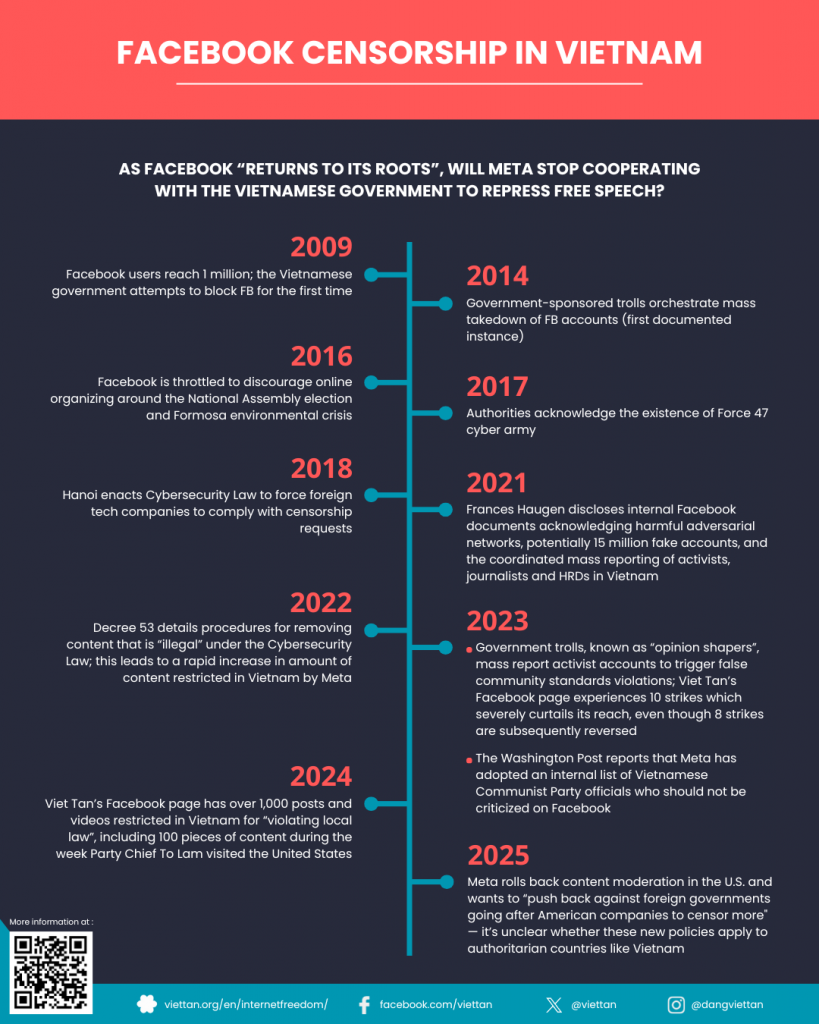
This timeline presents the challenges for social media in Vietnam — as seen by the Facebook platform — since 2009:
Recommendations for the Tech Companies
- Do not cooperate with the Vietnamese government to restrict internet freedom
- Ensure a safe and open online environment by addressing adversarial harmful networks and other social harms by shutting down networks that engage in coordinated mass reporting and other social harms
- Provide an avenue for Vietnamese activists, journalists and stakeholders to appeal content takedowns
Previous Viet Tan Research:
Real time online censorship in Vietnam
Censorship by other means
#StopVNtrolls
Hanoi’s Cybersecurity law
Facebook and Civil Disobedience in Vietnam
Denial of service – cyberattacks by the Vietnamese government
# # #