July 23, 2013
The United States is correct in recognizing Vietnam as a strategic nation. With its dynamic population and enormous economic potential, Vietnam has the potential to contribute to a stable and prosperous region.
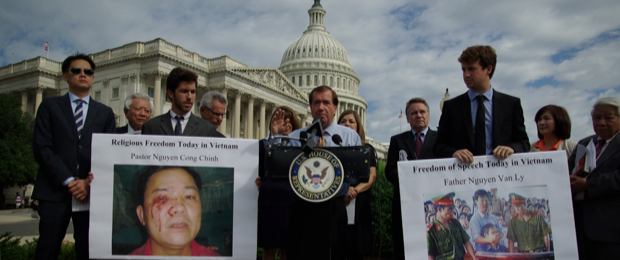
But Vietnam is also the new Myanmar in terms of repression. The Hanoi regime continues to detain peaceful activists, censor the Internet and block the development of civil society. The number of political trials has increased over the last year.
When they meet this week, President Obama should remind Truong Tan Sang that the key to unleashing Vietnam’s economic potential and ensuring its security is empowering its people. This can only happen through true political freedom, starting with the release of activists such as human rights attorney Le Quoc Quan, blogger Dieu Cay and musician Viet Khang.
If the U.S. is to develop a strategic relationship with Vietnam, it must be a Vietnam where university students can freely blog about the country’s foreign policy challenges and citizens can peacefully demonstrate for their country’s territorial interests. It must be a Vietnam in which the role of the military is to defend the homeland, not a political regime.
Likewise, if the U.S. is to complete a high standard Trans-Pacific Partnership Agreement with Vietnam, Hanoi must respect the rule of law and international norms. Unfortunately, this is not the case in the Socialist Republic of Vietnam where the government applies tax evasion charges to silence dissent and flaunts its international commitments on human rights.
Virtually all Vietnamese welcome closer ties with the U.S. In many ways, the interests of Americans and Vietnamese are aligned on economic engagement, regional security and political openness. President Obama has the opportunity now to stand with the Vietnamese people.
Truong Tan Sang is the president of the Socialist Republic of Vietnam, but the people have never elected him to office. In the short term it may be necessary for Washington to deal with autocrats.
To advance long-term U.S.-Vietnam interests, President Obama must heed the words from his second inaugural address: “our interests and our conscience compel us to act on behalf of those who long for freedom.”
Contact: Duy Hoang +1.202.596.7951