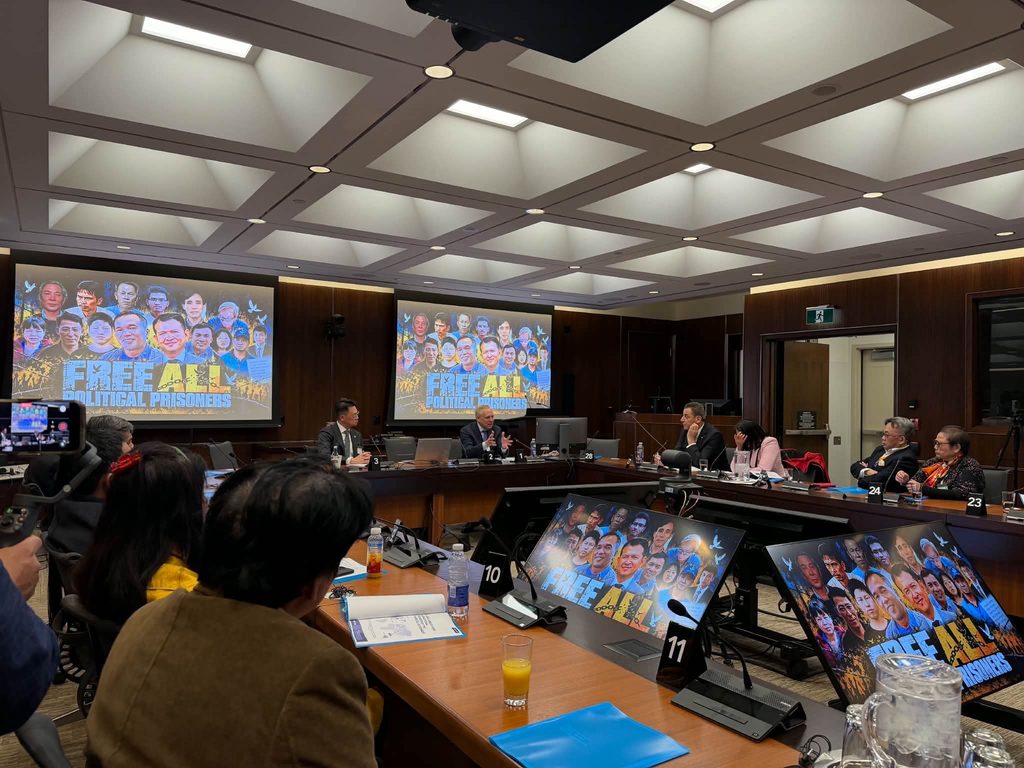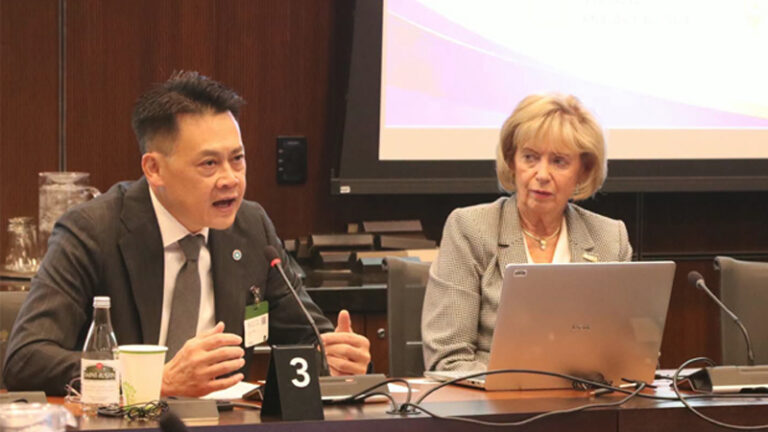
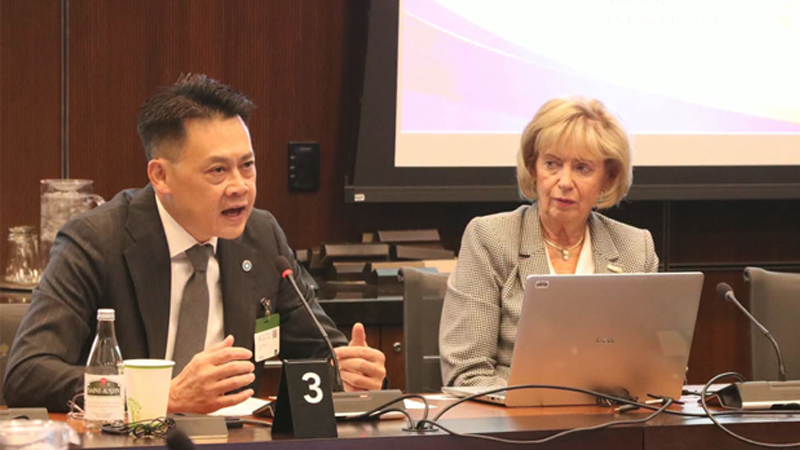
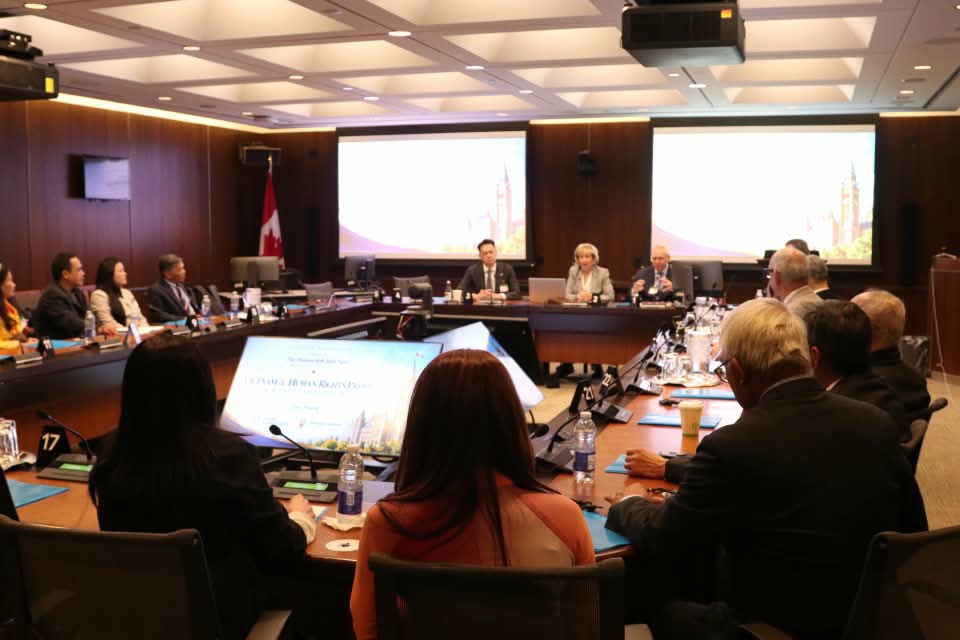
Remarks at the Canadian Parliament on October 6, 2026
by Duy Hoang, Executive Director Viet Tan
Distinguished Members of Parliament, dear friends,
It’s an honor for me to speak with you today. Many thanks to MP Judy Sgro for hosting this event.
At the World Economic Forum in Davos earlier this year, Prime Minister Carney stated: “Middle powers like Canada, are not powerless. They have the capacity to build a new order that embodies our values, like respect for human rights, sustainable development, solidarity, sovereignty and territorial integrity of states.”
Just two weeks ago, Mr. To Lam, the leader of the Socialist Republic of Vietnam, paid a state visit to Canada to elevate bilateral relations to a strategic partnership.
As someone of Vietnamese heritage, I am happy that Canada sees the potential of Vietnam’s 100 million people. And as someone who follows the upheaval in North American relations, I fully understand why Canada would want to diversify its relationships and build a new order of like-minded nations.
As Prime Minister Carney put it: “We’re engaging broadly, strategically, with open eyes. We actively take on the world as it is, not wait around for a world we wish to be.”
In that spirit, allow me to offer three recommendations on how a democratic middle power like Canada can engage a not-so-democratic middle power like Vietnam.
The first recommendation is to be clear-eyed about who you’re engaging with.
Yes, Vietnam has great weather, beautiful beaches, delicious food, friendly people, and tremendous economic potential. All of that is true of Vietnam as a country. But we need to distinguish the country from the regime. So let’s talk about Mr. To Lam who was just here.
Like Xi Jinping, To Lam is both General Secretary of the Communist Party and State President. And like Vladimir Putin, To Lam ran the security apparatus before he became the top leader.
For eight years as Minister of Public Security, he oversaw an unprecedented crackdown on peaceful dissent. He was also directly implicated in one of Europe’s most brazen acts of transnational repression. In 2017, a former Vietnamese official who had sought asylum in Germany was snatched from a park in Berlin and smuggled through Slovakia and Moscow back to Vietnam.
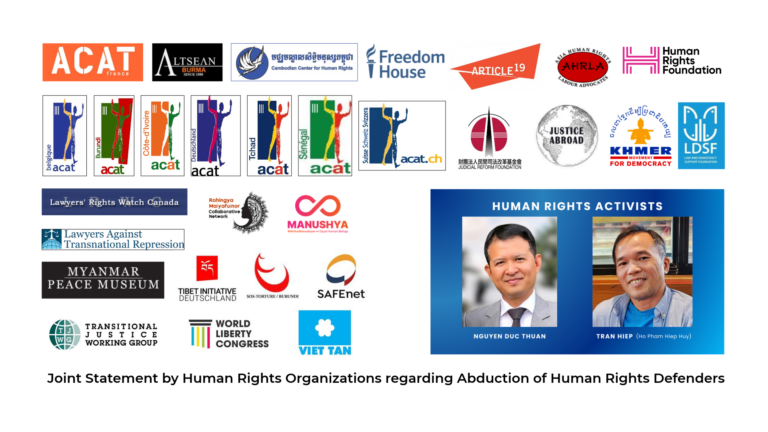
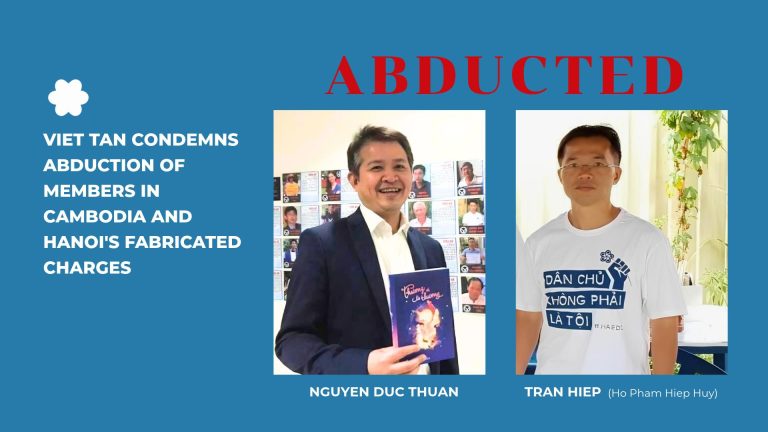
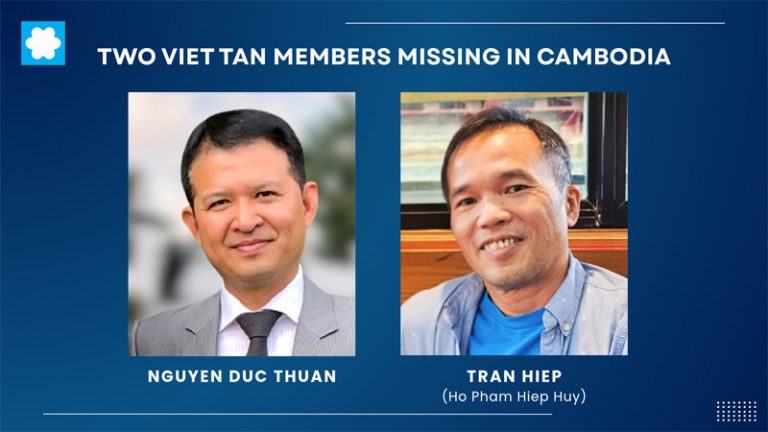
The week before To Lam was in Ottawa, two of my colleagues — Nguyen Duc Thuan and Tran Hiep — were abducted in Cambodia and forcibly taken to Vietnam, where they now face accusations of terrorism and using fake documents to enter a country that they never planned to enter.
How Orwellian is that. These are two long-time human rights defenders who were in Cambodia to meet with other activists. Thuan is a Norwegian citizen. Hiep is an Australian citizen.
What does the snatching of human rights defenders across borders say about Hanoi’s regard for human rights, sovereignty, and the territorial integrity of states? As you engage with Vietnam, please look beyond the economic headlines.
The second recommendation is to have bright lines on what Canada stands for.
Of course, it’s up to Canadian diplomats and parliamentarians to articulate your values. But if I may, let me suggest a few key principles.
One is protecting Canadian citizens. For example, a Canadian travelling through Cambodia — or anywhere else — should never be targeted for abduction. Canadians, especially those of Vietnamese heritage, should never be censored or targeted by a foreign government for their political views.
Another is making sure trade doesn’t come at the expense of workers, in either country. Supporting labour standards and worker rights in Vietnam helps ensure Canadian trade isn’t built on sweatshop conditions.
A third is taking corruption seriously. It’s not a victimless cost of doing business. According to a 2024 UN-backed survey, corruption was the top concern for Vietnamese citizens — cited by a record 23 percent of respondents, up from 5 percent the year before. And in a one-party state without a free press and without independent courts, there’s no mechanism to correct it. Canadian investors in Vietnam will run into this. Canada shouldn’t look away.
The main avenue for exposing corruption in Vietnam is social media, which Hanoi routinely censors. So if Canada wants to help Vietnam tackle corruption, please support internet freedom, and insist that Meta and other tech companies stop blocking content simply because it criticizes Vietnamese officials.
The third recommendation is to be pragmatic and principled.
The international system is facing a stress test as we all know. But I don’t think we are destined for a world of great power rivalry where middle powers must forsake their values.
Canada has rightfully identified the strategic importance of the Indo-Pacific and the potentially critical role of Vietnam.
You don’t need to wait for a fully free and democratic Vietnam to increase bilateral ties. But Canada’s interests are better served by a more just and responsible Vietnam, one that embraces human rights and sustainable development.
Let’s remember Hanoi also wants things from Canada: an ASEAN-Canada trade agreement, a visit from the Prime Minister, support for hosting APEC next year.
The foreign ministers of Canada and Vietnam are to develop an Action Plan. This is the moment to ask for a standing human rights dialogue with real benchmarks, beginning with the release of political prisoners.
I urge Canada to join Norway and Australia in calling for the freedom of Thuan and Hiep. If like-minded middle powers are going to act together, this is a good start. We can all see that transnational repression will get worse if it isn’t checked now.
Canada is right to hedge. But if I could leave you with one message: Diversifying suppliers is not the same as diversifying principles.
Thank you for your support.