Updated on September 2026
Download the report in pdf.
Introduction
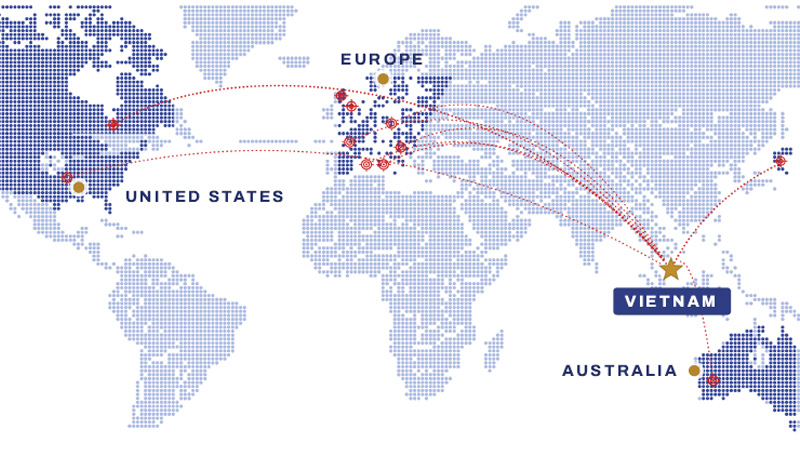
Repression is no longer confined to Vietnamese territory. Under General To Lam, Hanoi increasingly targets political exiles, refugees and the diaspora in democratic countries.
A new phase in Hanoi’s security strategy
Over the past several years, Vietnamese authorities have increasingly extended their mechanisms of control and repression far beyond the country’s borders.
After unleashing an unprecedented wave of repression against citizen journalists, human rights defenders, and dissident voices inside Vietnam, the communist regime, under the leadership of General To Lam, is intensifying its actions against activists and opponents living abroad.
This development marks a new phase in Hanoi’s security strategy: repression is no longer confined to Vietnamese territory, but increasingly targets political exiles, refugees, bloggers, human rights defenders, and members of the Vietnamese diaspora residing in democratic countries.
Through a wide range of methods (intimidation, surveillance, cyberattacks, administrative harassment, diplomatic pressure, and reprisals against family members), the Vietnamese authorities seek to silence critical voices, deter political activism in exile, and maintain a climate of fear within overseas Vietnamese communities.
Ten forms of transnational repression
Based on the OHCHR’s 2025 definition of transnational repression, this report examines ten categories of repressive tactics the Vietnamese government commits against people living outside its borders.
- Kidnapping, rendition, and death threats
- Direct threats and surveillance abroad
- Legal threats, including the misuse of INTERPOL or fabricated criminal charges
- Intimidation and harassment targeting members of the diaspora visiting Vietnam
- Harassment or punishment of family members remaining in Vietnam
- Digital threats, including hacking, spyware, leaks, and doxxing
- Pressure exerted through embassies, Vietnamese government officials, or pro-regime diaspora networks
- The refusal or conditional issuance of passports and administrative documents
- State-directed sabotage of refugee and asylum procedures
- Smear campaigns conducted through state-controlled media and social media platforms.
This analysis seeks to contribute to a better understanding of the Vietnamese government’s transnational repression practices and their consequences for fundamental rights, the safety of political exiles, and the integrity of democratic spaces in host countries.
Background on Vietnam
Behind the image of a dynamic, fast-growing economy remains an authoritarian system controlled by the Vietnamese Communist Party, and a security apparatus now reaching beyond its borders.
Economic openness without political opening
Vietnam has experienced rapid economic growth and increasing integration into the global economy. The country attracts significant foreign investment thanks to its abundant resources, strategic location, and resourceful labor force. However, economic liberalization has not been accompanied by political openings. Behind the image of a dynamic country remains an authoritarian system entirely controlled by the Vietnamese Communist Party (VCP), the only political party allowed to exist. No legal political opposition is tolerated, elections are neither free nor open, and the judiciary remains subordinated to the interests of the ruling party.
The contrast between ideals and practice is particularly striking in the social sphere. Under Vietnam’s state-capitalism, workers are denied worker rights,independent labour unions are prohibited, and attempts to organize are repressed. Citizens who document issues related to corruption, forced land seizures, environmental abuses, or violations of fundamental rights end up exposing themselves to arbitrary arrests, smear campaigns, and heavy prison sentences.
Bloggers, human rights defenders, environmental activists, and religious leaders deemed critical of the regime are prosecuted under vague provisions of the penal code relating to “anti-state propaganda” or “abusing democratic freedoms.” In recent years, prison sentences against activists have become increasingly severe. Whereas dissidents were previously sentenced to a few years, authorities now regularly impose sentences of a decade or more for peaceful activities linked to freedom of expression or association.
Repression has also expanded to social media. In Vietnam, simply sharing, commenting on, or even “liking” a post critical of the regime can lead to police summons, interrogations, or criminal prosecution. The authorities closely monitor Facebook, YouTube, TikTok and other social media platforms. The Vietnamese government often compels the tech companies to geo-block content deemed critical of the regime, especially when posts mention senior communist leaders.
The rise of To Lam and the police state
This repression intensified considerably after General To Lam became Minister of Public Security in 2016. Under his authority, the ministry developed a far more aggressive and pervasive security apparatus. Digital surveillance increased, arrests of activists multiplied, and prison sentences became harsher. The authorities no longer target only traditional political dissidents, but have also arrested environmental activists, independent experts, lawyers, religious representatives, and ordinary citizens, who express divergent opinions.
The situation has become even more alarming since To Lam rose to the position of General Secretary in the VCP, the most powerful office in the regime, while also serving as President of the state. This concentration of power has reinforced the personalization of the security apparatus and accelerated Vietnam’s transformation into a de facto police state. Many key positions are now occupied by officials from the security forces, including police generals Luong Tam Quang and Nguyen Duy Ngoc, both promoted to the Politburo.
The career path of To An Xo is particularly illustrative of the fusion between the security apparatus, diplomacy, and propaganda. In the 2000s he was stationed in New York and Washington, D.C. under the cover of being a journalist for the Vietnam News Agency. He was later appointed Vietnamese consul in Houston around 2014 before returning to Vietnam in 2017 as a lieutenant general, spokesperson and chief of staff at the Ministry of Public Security. When To Lam became state president in 2024 and then general secretary, To An Xo joined him as principal advisor and chief of staff.
Despite its international commitments and its desire to present itself as a reliable economic partner, the Vietnamese government continues to systematically violate fundamental freedoms. The absence of political pluralism, the subordination of the judiciary, the use of the police as an instrument of political control, and the expansion of transnational repression demonstrate that the regime is evolving toward an increasingly authoritarian model.
Documented cases
To illustrate the nature of Vietnamese transnational repression, this report documents the stories of twenty victims, spanning all ten categories of repression perpetrated by Hanoi.
Twenty documented cases
Each case below falls into one or more of the ten categories of transnational repression perpetrated by the Vietnamese government. There are numerous instances of transnational repression carried out by the Vietnamese government around the world. The following cases are not exhaustive and merely serve to illustrate the scale of the situation.

Dang Thi Hue, aka Hue Nhu, Germany, ongoing since 2024

Case Profile: Civil rights activist Dang Thi Hue was targeted by Vietnamese requests to Interpol/Europol, while her family members in Vietnam face ongoing police harassment
TNR Category: Legal threats: misuse of INTERPOL/ASEANPOL or fabricated criminal cases, Harassment or punishment of family members in the home country, Smear campaigns on state & social media
Host Country: Germany
Year occurred: Since 2024 and still ongoing
Citizenship: Vietnamese
Area of Activism: Civil rights, anti-corruption and freedom of expression
Status: In exile
Summary:
Dang Thi Hue, also known as blogger Hue Nhu, is a former teacher who has campaigned against government corruption and advocated for workers’ rights in Vietnam. In October 2019, she was arrested and later sentenced to three years and three months in prison on charges of “disturbing public order.” Following her release in 2023, she continued to speak out on social and political issues. After receiving warnings that she would face renewed arrest, she fled Vietnam and sought refuge in Thailand in May 2024.
Although recognized by UNHCR as a refugee in Thailand, Dang Thi Hue remained a target of Vietnamese authorities. On 24 October 2024, police officers searched her parents’ home in Vietnam, ostensibly looking for belongings linked to her. The operation was recorded by security cameras installed at the family residence. The search occurred despite the fact that Dang Thi Hue had already been living outside Vietnam for several months.
Vietnamese authorities subsequently directed pressure toward her family members. In March and May 2025, police issued summons ordering Dang Thi Hue to appear for questioning at a police station in Thai Binh Province. The authorities were fully aware that she was no longer residing in Vietnam. The summons were delivered to her parents’ home, placing them under direct pressure and creating an atmosphere of intimidation. Such actions appear designed less to secure her attendance and more to remind family members that they remained under official scrutiny because of their daughter’s activities.
In June 2025, Dang Thi Hue was granted political refugee status in Germany. Nevertheless, legal pressure from Vietnam continued to escalate. On 28 October 2025, police in Hung Yen Province issued an arrest warrant against her under Article 117 of the Vietnamese Penal Code, which criminalizes “propaganda against the government” and has frequently been used against journalists, bloggers, and peaceful government critics. The timing of the warrant, issued after she had already obtained refugee protection abroad, raises serious concerns that Hanoi uses criminal proceedings as a tool to overreach into another nation’s borders and pursue a political opponent.
The transnational dimension of the case became even more apparent on 9 April 2026, when German authorities informed Dang Thi Hue that the Vietnamese government had formally requested her arrest and deportation from Germany. The request was rejected by the German authorities, who recognized her protected refugee status. Unable to have Dang Thi Hue extradited to Vietnam, the Vietnamese authorities held a trial in absentia on 8 June 2026, sentencing her to 10 years in prison under Article 117. The types of repression Dang Thi Hue recently faced raises concerns about the use of international law-enforcement cooperation and Vietnamese criminal proceedings to pressure political critics abroad, while also testing Germany’s ability to protect individuals living under its jurisdiction.
Government harassment has continued beyond formal legal measures. In May 2026, the owner of Dang Thi Hue’s rented apartment reportedly received repeated phone calls from a number appearing to be associated with the Vietnamese Consulate in Frankfurt. According to the owner, when the calls were answered, nobody spoke. While the purpose of these calls remains unclear, they contributed to an environment of intimidation surrounding her place of residence.
Since leaving Vietnam in May 2024, Dang Thi Hue has also been subjected to sustained online harassment. She has received large numbers of abusive and threatening messages on social media, while fabricated nude images created through artificial intelligence have been circulated online in an apparent attempt to discredit and humiliate her. The abuse has extended to her parents in Vietnam, who have also been targeted by insulting messages and online attacks. Taken together, the repeated police actions against her family, the issuance of criminal charges after her exile, the request for her arrest abroad, and the continuing campaign of intimidation, suggest a pattern of transnational repression aimed at silencing a peaceful activist beyond Vietnam’s borders.
Doan Bao Chau, Vietnam/Canada, 2026
 Case Profile: Canadian-based journalist Doan Bao Chau was sentenced in absentia to 7 years in prison by a Vietnamese court
TNR Category: Direct threats and surveillance abroad
Host Country: Canada
Citizenship: Vietnamese
Year occurred: 2026
Area of Activism: Human rights, anti-corruption, government accountability, and freedom of expression
Status: Exiled
Summary:
Doan Bao Chau is a Vietnamese journalist, writer, photographer, interpreter and Karate Do master. He previously worked as a journalist for Vietnam Investment Review and as a freelance photographer for international media including the Associated Press (AP), Reuters, Agence France-Presse (AFP) and The New York Times. He is also the author of six published novels.
For many years, he used Facebook to report and conduct interviews on human rights, prisoners of conscience, land disputes, environmental issues and other matters of public interest. He also raised funds for families of imprisoned activists. His Facebook page has over 230,000 followers.
His contention with the Vietnamese authorities date back to 2000, when he interpreted interviews with Vietnamese dissidents for a daily newspaper in California called the Orange County Register. He was subsequently banned from taking photographs for the foreign press for more than a year.
The repression intensified in June 2024. On 19 June 2024, while working as an interpreter at a conference organized by the United Nations Office on Drugs and Crime (UNODC) in Hue, Doan Bao Chau received a summons from the Investigative Security Agency of the Hanoi City Police concerning a complaint reportedly filed by the Cybersecurity and High-Tech Crime Prevention Department.
The fact that he was summoned while performing professional work for a United Nations agency is particularly significant. His case illustrates how Vietnamese authorities targeted him in the course of his legitimate professional activities, rather than for any conduct involving violence or a conventional criminal offence.
On 24 June, he appeared for questioning at the Hanoi police headquarters. According to his account, investigators presented him with a substantial case file titled “Proposal to Initiate Prosecution” and accused him of producing and distributing material defamatory toward the government, insulting the leadership, distorting information and using “psychological warfare” to cause public confusion. The file reportedly included interviews with families of prisoners of conscience, human rights activists and lawyers involved in politically sensitive cases.
He was subjected to extensive interrogation and placed under a travel ban. He understood that an arrest was imminent and subsequently went into hiding before leaving Vietnam.
The Committee to Protect Journalists (CPJ) reports that more than 20 police officers raided and searched his Hanoi home on 3 July 2025. Authorities charged him under Article 117 of the Penal Code and issued an arrest warrant on 14 August 2025.
After fleeing to Thailand and seeking international protection, Doan Bao Chau received information indicating that Vietnamese authorities continued efforts to monitor him and his associates. According to Chau’s account to UNHCR, a friend in Vietnam who had supported Ukrainian victims with Chau was reportedly kidnapped, summoned, and interrogated about their relationship. Another acquaintance told him that Chau was among 403 individuals under close surveillance and considered a priority for arrest because of his “foreign factors.”
Vietnamese local police also reportedly contacted him through an instant messaging app called Zalo to determine his whereabouts, while security personnel continued to monitor his home in Vietnam.
These incidents suggest that the authorities’ efforts did not end with his departure from Vietnam, but extended to his associates and made attempts to establish his whereabouts abroad.
On 3 August 2026, the Hanoi People’s Court convicted Doan Bao Chau in absentia under Article 117 and sentenced him to seven years in prison, followed by five years of probation, due to social media reporting critical of the government. The prosecution relied on six video clips, including material posted on his Facebook account and his appearance on BBC Vietnamese, which authorities characterized as fabricated information, defamatory content and “psychological warfare.”
Doan Bao Chau is now living in exile in Canada. His case illustrates how Vietnam’s criminal justice system can be used to silence independent journalists beyond the country’s borders with trials in absentia. His prosecution raises serious concerns regarding freedom of expression and freedom of the press, while the continued efforts to monitor him abroad and his associates in Vietnam demonstrate the transnational dimension of the repression.
Duong Van Thai, Bangkok, 2023
 Case Profile: Journalist Duong Van Thai abducted in Bangkok and forcibly returned to Vietnam
TNR Category: Kidnapping, rendition, and death threats, State-directed sabotage of asylum procedures
Host Country: Thailand
Year occurred: 2023
Citizenship: Vietnamese
Area of Activism: Anti-corruption, government accountability, freedom of expression
Status: Imprisoned with a 12 year sentence
Summary:
In April 2023, Duong Van Thai, a blogger who had taken refuge in Thailand, disappeared in Bangkok before showing up again at a detention center in Vietnam. His case is the third high profile incident in recent years where a Vietnamese citizen was seeking asylum in a host country and then abducted back to their homeland.
Duong Van Thai (who also used the pen name Thai Van Duong) wrote about democracy and human rights and participated in protests related to environmental rights before he had to flee to Thailand in 2019 for fear of political persecution. He applied and received refugee status from the UN Refugee agency, but was abducted and returned to Vietnam in 2023 before resettlement. Once in Vietnam, Duong Van Thai was sentenced in 2024 to 12 years in prison for “propaganda against the government” under Article 117 of the Vietnamese Penal Code.
In a letter to family in March 2025, Duong Van Thai confirmed he was kidnapped by the Vietnamese authorities as many human rights organizations had previously suspected, which countered Hanoi’s narrative that he was arrested for illegally entering Vietnam through Laos. Duong Van Thai’s case reinforces a pattern where the Vietnamese government abducts individuals without transparent extradition proceedings to silence critics and compromise the national sovereignty of another nation.
John Doe 1, Denmark, 2024

Case Profile: Danish citizen arbitrarily detained for 11 hours in Vietnam, passport confiscated, interrogated, and forcibly deported back home over a photo showing participation in a peaceful protest in Denmark
TNR Category: Direct threats and harassment to members of the diaspora visiting Vietnam
Host Country: Denmark
Year occurred: 2024
Citizenship: Danish
Area of Activism: Vietnamese diaspora community activities
Status: Denied entry and banned from Vietnam
Summary
John Doe, a Danish citizen, was stopped at the border control upon entering Vietnam. The individual was taken to an immigration department room, and subjected to a six-hour interrogation by security officers.
Authorities accused the Danish citizen of belonging to Viet Tan, a pro-democracy party labeled as a terrorist organization by Hanoi. Officers produced surveillance photos of the individual attending a peaceful protest in Denmark as alleged evidence for membership in Viet Tan.
Despite denying the accusations, the individual was held for an additional five hours, had his passport confiscated by an officer who initially lied about possessing it, and was forcibly deported and escorted back to Denmark.
This case vividly illustrates Vietnam’s use of cross-border surveillance and control of movement against foreign nationals. By monitoring a peaceful political demonstration taking place thousands of miles away on the streets of Denmark, the Vietnamese regime demonstrated its capacity to track the diaspora globally. The state then weaponized this intelligence at its border to deny entry, interrogate, and deport a European citizen for exercising their right to free speech and assembly abroad. This tactic functions as a severe form of intimidation, suggesting that activities protected in their home countries may nonetheless result in arbitrary detention, or targeting, upon travel to Vietnam.
Sources: Personal narrative, provided on 21-05-2026
John Doe 2, United Kingdom, 2025
Case Profile: Harassment against family of a human rights activist living in the UK
TNR Category: Harassment or punishment of family members in the home country, Smear campaigns on state & social media
Host Country: UK
Year occurred: 2025
Citizenship: Vietnamese
Area of Activism: Human rights
Status: Family targeted in Vietnam
Summary
John Doe 2 participated in a public demonstration in the United Kingdom on 4 May 2025 commemorating the fall of Saigon that had occurred on 30 April 1975. The event was attended by a large number of participants and constituted a peaceful exercise of freedom of expression and assembly.
Following the demonstration, social media accounts based in Vietnam published photographs of John Doe 2 taken during the event. These accounts also shared photographs of his wife and children, who reside in Vietnam. The images were used in online campaigns aimed at stigmatizing, defaming, and intimidating the family. Social media posts encouraged public condemnation, social boycott, and harassment of John Doe 2 and his relatives.
The repercussions extended beyond social media. According to the testimony, teachers at his children’s school circulated photographs of John Doe 2 participating in the demonstration, along with photographs of his wife and children, and described the family as being opposed to the Vietnamese state. As a result, his children were subjected to verbal abuse and physical assaults by fellow students. His wife also experienced significant social pressure. She was reportedly ostracized and publicly insulted within her local community. In addition, she was summoned by local police for questioning, which the family perceived as an attempt to intimidate them because of John Doe 2’s participation in a political demonstration abroad.
Several influential social media personalities in Vietnam further amplified the campaign by publishing posts about the family, contributing to a climate of hostility, public shaming, and intimidation. The case demonstrates how an individual’s peaceful participation in a public demonstration outside Vietnam can result in reprisals against family members residing within the country.
Apart from John Doe 2, several other participants in the UK demonstration report family members experiencing similar issues. This case illustrates a pattern of transnational repression whereby activities lawfully conducted abroad are followed by harassment, intimidation, and pressure directed at relatives remaining in Vietnam.
John Doe 3, Europe, 2025
Case Profile: Access to visa is used as leverage to pressure an individual living abroad into acting as an informant against members of a diaspora community
TNR Category: Pressuring exiled persons through embassies/Vietnamese government officials, or diaspora loyalists
Host Country: Europe
Year occurred: 2025
Citizenship: European
Area of Activism: Vietnamese diaspora community activities
Status: Ongoing
Summary:
John Doe 3 is a European citizen born in Vietnam who has lived in Europe for several decades. He is a well-known figure within the Vietnamese diaspora and has been actively involved in community organizing for many years. He is married to a Vietnamese national who recently migrated to Europe. The couple travels to Vietnam on a regular basis to maintain family ties.
Seeking to facilitate these frequent visits, John Doe 3 contacted the Vietnamese embassy in his country of residence to apply for a long-term visa. According to his testimony, embassy officials informed him that the visa would only be granted if he agreed to provide information about members of the Vietnamese diaspora. The officials were reportedly interested in activists, including individuals who had recently been resettled from Thailand.
The information requested included details regarding the activities of diaspora organizations as well as personal data concerning individuals perceived as critics of the Vietnamese government. The embassy officials asked for information such as address, telephone number, email address, occupation, and social network. These officials reportedly made clear that his application for a long-term visa would not be approved unless John Doe 3 cooperated.
John Doe 3 refused to provide the requested information. The pressure did not end there. During subsequent trips to Vietnam, local police repeatedly summoned him to attend so-called “working sessions.” During these meetings, officers allegedly questioned him about the Vietnamese diaspora in Europe and again encouraged him to cooperate by providing information about activists and community members abroad. The questioning focused on diaspora activities, networks, and individuals considered by the authorities to be opponents of the Vietnamese regime.
John Doe 4, Netherlands, 2017
 Case Profile: Dutch citizen singled out at the Vietnamese border, denied entry on security grounds, compelled to sign an official document without translation, and deported to Singapore.
TNR Category: Intimidation and harassment targeting members of the diaspora visiting Vietnam
Host Country: The Netherlands/Vietnam
Year occurred: 2017
Citizenship: Dutch
Area of Activism: Vietnamese diaspora community activities
Status: Denied entry/banned from Vietnam
Summary
John Doe 4 is a Dutch citizen who was denied entry to Vietnam in November 2017 while travelling to the country for tourism and to visit family.
Upon arrival at Tan Son Nhat International Airport in Ho Chi Minh City, John Doe 4 was singled out by Vietnamese authorities while waiting in the immigration line. Authorities took possession of their passport and conducted an extended inspection. John Doe 4 was subsequently escorted to a separate room by several officials and informed that entry to Vietnam would be denied.
John Doe 4 was separated from their travel companion and was not permitted to make telephone calls. While alone with the officials, John Doe 4 was presented with an official document written in Vietnamese and required to sign it before being allowed to leave. John Doe 4 requested an English-language version in order to understand the document, but no translation was provided.
The official document, issued by the border security authorities at Tan Son Nhat Airport, states that entry was refused “for security reasons” under Article 21(9) of Vietnam’s Law No. 47/2014 concerning the entry, exit, transit and residence of foreigners in Vietnam. The document explains that John Doe 4 was not permitted to enter Vietnam and required the individual to remain under airport authorities’ control while awaiting the return flight to Singapore.
After signing the document, John Doe 4 was immediately escorted back to the aircraft and deported to Singapore. Both John Doe 4 and the travel companion were deprived of access to their passports throughout the incident and did not regain possession of them until after landing in Singapore.
The authorities did not provide a specific explanation for the security concern beyond what was stated in the official document. However, John Doe 4 has publicly engaged with foreign government officials and NGOs about democracy and human rights issues in Vietnam. The fact that John Doe 4 was singled out at the border, subjected to an extended passport inspection, separated from the travel companion, and denied entry specifically on security grounds, highlights the Vietnamese authorities’s attempt to monitor and target individuals in the diaspora for their political activities and affiliations that are protected rights in their home country.
The case illustrates how Vietnamese authorities can use border controls and denial of entry to intimidate members of the Vietnamese diaspora engaged in peaceful political and civic activities abroad. Furthermore, this incident demonstrates the coercive nature of the Vietnamese authorities who required John Doe 4 to sign an official document that they could not understand, without access to a translation, legal assistance, or communication with others, before being permitted to leave the country.
Le Chi Thanh, Thailand, 2026
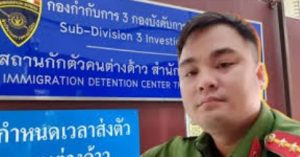
Case Profile: Vietnamese authorities arbitrarily canceled Le Chi Thanh’s valid passport (originally set to expire in 2031) without prior notification.
TNR Category: The refusal or conditional issuance of passports and administrative documents
Host Country: Thailand
Citizenship: Vietnamese
Year occurred: 2026
Area of Activism: Anti-corruption, government accountability, and freedom of expression
Status: Detained (Suan Phlu Immigration Detention Centre, Bangkok)
Summary
Le Chi Thanh is a Vietnamese anti-corruption activist and former police officer who used social media to expose misconduct within the public security sector. In April 2021, he was arrested following an encounter with traffic police in Thu Duc City and later sentenced to two years in prison for “resisting officers.” In January 2022, he received an additional three-year sentence under Article 331 of Vietnam’s Penal Code for Facebook posts criticizing authorities. He was reportedly subjected to ill-treatment in custody, released in 2025, and subsequently left Vietnam.
He lawfully entered Thailand using a valid Vietnamese passport set to expire in 2031 and later obtained a Thai work permit. However, in March 2026, Vietnamese authorities reportedly cancelled his passport without prior notice, invalidating his legal status. Shortly afterward, Thai immigration police arrested him and placed him in the Immigration Detention Center (IDC), where he faces possible deportation.
Incident Log
| Date | TNR Method | Description |
| Prior to March 6, 2026 | Passport cancellation leading to loss of legal status | Vietnamese authorities reportedly cancelled Lê Chí Thành’s passport without prior notice, which caused his visa to become invalid and left him without legal status in Thailand. |
| March 6, 2026 | Use of host-country immigration enforcement to arrest individuals | Thai immigration police arrested Le Chi Thanh at his home in Pathum Thani province and detained him at Suan Phlu Immigration Detention Centre in Bangkok. |
| March, 2026 | Use of origin-state embassy access to detainees in IDC | Vietnamese embassy personnel reportedly visited him while he was detained in the IDC. |
| Ongoing | Use of diplomatic pressure to facilitate deportation | Vietnamese authorities reportedly applied pressure on Thai authorities to facilitate his deportation to Vietnam. |
Le Trung Khoa, Berlin, ongoing since 2017
Case Profile: Germany-based journalist and newsagency Thoibao.de founder Le Trung Khoa sentenced in absentia to 17 years in prison by a Vietnamese court.
TNR Category: Direct threats and surveillance abroad
Year occured: 2025
Host Country: Germany
Citizenship: German
Area of Activism: Journalism
Status: In exile, under the protection of German police
Summary
Founder of the independent media outlet Thoibao.de, Le Trung Khoa has for many years reported on corruption, political repression, and internal power struggles within the Vietnamese regime. He gained international recognition in 2017 as the first journalist to report on the abduction of Trinh Xuan Thanh in Berlin by Vietnamese agents, a case that triggered a major diplomatic crisis between Germany and Vietnam.
Since then, Le Trung Khoa has reportedly been subjected to sustained threats and pressure linked to his journalistic activities. In December 2025, Vietnamese authorities tried him in absentia and sentenced him to 17 years in prison for “propaganda against the government,” an accusation frequently used to silence activists inside the country. Despite the fact that he is now a German citizen, the Vietnamese government officially requested that German authorities arrest and deport him to Vietnam. The request was widely viewed by observers and human rights advocates as an attempt to extend Vietnamese political repression onto German territory and to intimidate exiled journalists critical of the regime.
Due to credible security concerns, Le Trung Khoa currently lives under permanent police protection. His case illustrates the extent to which the Vietnamese government is prepared to target dissident journalists abroad through judicial harassment, diplomatic pressure, and intimidation measures, even when those individuals have obtained citizenship and legal protection in democratic states. It also demonstrates the long-term risks faced by journalists who expose sensitive operations carried out by the Vietnamese security apparatus overseas.
Minh Anh Vu, Japan, ongoing since 2021
 Case Profile: The Vietnamese Embassy refused to renew Minh Anh Vu’s passport.
TNR Category: Refusal to issue or renew passports or conditioning documentation on coercive ‘quid pro quo’ demands
Host Country: Japan
Year occurred: Since 2021 and still ongoing
Citizenship: Vietnamese
Area of Activism: Education
Status: Renunciation of Vietnamese citizenship not yet completed
Minh Anh Vu lives and works in Japan. In 2021, the Vietnamese Embassy in Japan refused to renew Minh Anh Vu’s passport, citing alleged participation in activities deemed “anti-government.” After Vietnamese authorities summoned her for questioning multiple times over four months, a passport was finally issued, but with only a one year validity instead of the standard 10 year term. A full renewal was not granted until the following year. In 2024, she applied to renounce her Vietnamese citizenship as part of the Japanese naturalization process, but the required certificate of renunciation has still not been issued.
During this period of waiting to get naturalized in Japan, she would travel to Vietnam for business trips. While in Vietnam, the local police summoned her for interrogation on multiple occasions to question her activities and daily life in Japan. When she declined to provide information as demanded, she was threatened with a ban on leaving the country, pressure on her family, and refusal to issue the certificate needed to complete her renunciation of Vietnamese citizenship.
To date, she has been unable to complete her Japanese naturalization, despite the Japanese authorities repeatedly urging her to submit the renunciation certificate. Minh Anh Vu’s case provides insight into how a government can potentially extend its influence over a citizen living abroad through control of passports, citizenship documentation, border mobility, and family members. In particular, administrative measures are used to create prolonged uncertainty and interfere with an individual’s ability to establish secure legal status in another country.
Montagnard community in Thailand
 Case Profile: Montagnard Refugee Community in Thailand
TNR Category: Pressure exerted through embassies, Vietnamese government officials, or pro-regime diaspora networks
Host Country: Thailand
Citizenship: Vietnamese
Area of Activism: Religious freedom,land rights, ethnic minority rights, political autonomy/ self-determination
Status: Ongoing
Summary:
Approximately 1,700 Vietnamese refugees are currently in Thailand, including around 500 Montagnard ethnic minorities However, the exact number is uncertain due to undocumented migration.
Montagnards have fled Vietnam due to persistent persecution by authorities. This includes surveillance, harassment, arrests, imprisonment, and torture. The main causes of repression are land disputes, restrictions on religious freedom, and political issues, particularly demands for autonomy and self-determination.
Despite seeking refuge in another country, the community continues to face transnational repression from Vietnamese authorities, with reports of monitoring, pressure to return, and harassment coordinated with local authorities of the host country.
Incident Log
| Date | TNR Method | Description |
| November 2023 | Vietnamese police/ embassy personnel access IDC to carry out investigations | Following a police raid, several Montagnard refugees were detained in IDC. During detention, Vietnamese police came in to question them about HRD Y Quynh Bdap, including requests for his phone number and place of residence. |
| March 2024 | Coercive repatriation via public outreach | Vietnamese Major General Rah Lan Lam of Gia Lai Province traveled to Bangkok, reportedly with the support of Thai police, met publicly with members of the Montagnard community to encourage their return to Vietnam. |
| February 2025 | Coercive repatriation via detention center access | During an arrest operation, 65 Montagnard refugees were detained and transferred to IDC. Vietnamese embassy personnel later accessed the facility to encourage repatriation. |
| Ongoing | Cross-border police cooperation | Vietnamese police reportedly accompany Thai police during raids of refugee residential areas. |
| Ongoing | Use of interpreters for intelligence gathering | During UNHCR interviews and related procedures, interpreters are reportedly used to collect information from refugees. |
Nguyen Ngoc Duc, Phnom Penh, 2017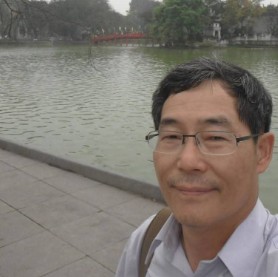
Case Profile: French citizen Nguyen Ngoc Duc and senior Viet Tan leader was attacked with acid in Cambodia in 2017
TNR Category: Direct threats and surveillance abroad
Host Country: France (Cambodia)
Citizenship: French
Area of Activism: Democracy and political freedom
Status: In continuous medical treatment in France
Summary
The case of Nguyen Ngoc Duc, a French citizen and senior Viet Tan leader, illustrates the sophisticated and intimidating nature of transnational repression targeting Vietnamese dissidents abroad. On Vietnam’s National Day, 2 September 2017, Nguyen Ngoc Duc and several other Vietnamese activists were the victims of an acid attack in Cambodia. The symbolic timing of the assault strongly suggests that the attack was not random, but rather politically motivated and intended as a warning to pro-democracy activists opposing the Vietnamese communist regime. The attack caused serious injuries and forced the victims to seek urgent medical treatment in Cambodia.

The intimidation reportedly continued even after the assault. While hospitalized in Cambodia, Nguyen Ngoc Duc was approached by an individual claiming to have been sent by his French insurance company. The man requested permission to photograph his entire body, allegedly for insurance purposes. However, after returning to France, Nguyen Ngoc Duc discovered that his insurance company had never sent anyone to the hospital. The individual’s real objective appeared to be documenting the physical consequences of the attack as a “damage assessment” on behalf of those responsible.
Days later, Nguyen Ngoc Duc reportedly received a text message from a Vietnamese phone number claiming that the acid attack had been ordered by another member of Viet Tan. This type of disinformation operation aims to sow distrust, suspicion, and internal divisions within opposition networks abroad. Taken together, the attack, the suspicious hospital visit, and the subsequent manipulation attempt reflect a broader pattern of psychological intimidation and covert harassment frequently associated with Hanoi’s transnational repression.
Nguyen Van Dai, Berlin, ongoing since 2023
Case Profile: Exiled human rights lawyer Nguyen Van Dai sentenced in absentia to 17 years in prison by a Vietnamese court.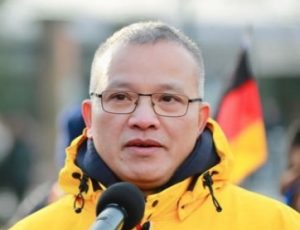
TNR Category: Direct threats and surveillance abroad
Year occured: 2025
Host Country: Germany
Citizenship: Vietnamese
Area of Activism: human rights, democracy and political freedom rights
Status: In exile, under the protection of German police
Summary
A well-known human rights attorney and co-founder of the Brotherhood for Democracy, Nguyen Van Dai has long been one of the most prominent pro-democracy voices in Vietnam. In 2015, Dai was arrested while attempting to meet with EU delegates for the annual EU-Vietnam Human Rights Dialogue. Held incommunicado for two and a half years, serving his pre- and post-trial detention under harsh conditions, Dai was sentenced in April 2018 to 15 years in prison and five years of house arrest on charges related to “activities aimed at overthrowing the state.” In June 2018, Dai was exiled to Germany.
However, the Vietnamese authorities continued their campaign of repression against Dai even after he went into exile. In December 2025, Nguyen Van Dai was tried again, this time in absentia, by Vietnamese courts and sentenced to 17 years in prison for “propaganda against the government,” an accusation frequently used to silence activists inside the country [5]. This new sentence is in addition to the previous 15-year sentence, meaning that Vietnamese authorities continue to treat him as a long-term political target despite his removal from the country years earlier. The decision was widely perceived as both a punitive measure and a warning directed at exiled activists who continue their advocacy work from abroad.
Unlike Le Trung Khoa, Nguyen Van Dai is not yet a German citizen, making his situation particularly concerning in the context of Vietnam’s growing pattern of transnational repression. Due to credible security risks, German police authorities reportedly provide him with a direct emergency contact allowing him to immediately alert both local and federal police services in the event of suspicious activity or threats against him. His case reflects the persistent insecurity faced by Vietnamese dissidents in exile and the concern among European authorities regarding the potential reach of Vietnamese security operations abroad.
Nguyen Van Trang, Phnom Penh, Zurich, ongoing since 2017
Case Profile: Exiled activist Nguyen Van Trang was attacked by acid in Phnom Penh in 2017, and continuously targeted in exile 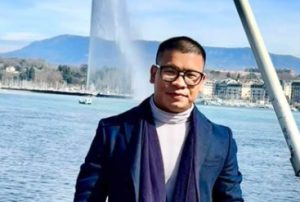
TNR Category: Direct threats or surveillance abroad, Harassment or punishment of family members in the home country, Digital threats: hacking, spyware, leaks, doxxing
Year occured: since 2017, ongoing
Host Country: Switzerland
Citizenship: Vietnamese
Area of Activism: human rights, democracy and political freedom rights
Status: In exile
Nguyen Van Trang is a Vietnamese pro-democracy activist and member of the Brotherhood for Democracy. In 2017, while in Phnom Penh, Cambodia, he and fellow activist Nguyen Ngoc Duc were attacked with acid. The Vietnamese authorities have persecuted Trang for his peaceful political activities, leading Switzerland to grant him refugee protection.
Since receiving protection from the Swiss government, Nguyen Van Trang has participated in international advocacy efforts on human rights and freedom of expression. Following these activities, Trang has faced harassment and intimidation from the Vietnamese authorities that raises concerns about the reach of Hanoi into another nation’s borders.
These pressure tactics have included online harassment and defamation campaigns carried out through websites and social media accounts supportive of the Vietnamese government. The content published about him has included personal attacks, politically disparaging claims, and misrepresentations of his human rights work, apparently aimed at discrediting and intimidating him.
In November 2025, An Ninh TV, a media outlet affiliated with Vietnam’s Ministry of Public Security, rebroadcasted a wanted notice originally issued against Nguyen Van Trang in 2018. The timing coincided with his participation in international human rights advocacy, including appearances before policymakers and international audiences.
His relatives in Vietnam have also faced government harassment. Security officials have repeatedly visited family members, sought information about his activities, and urged them to persuade him to return to Vietnam. Since 2025, his family has received two official documents calling on him to surrender, warning that he would face “strict handling in accordance with the law” if he refused.
In addition, Nguyen Van Trang was warned by a Swiss citizen of Vietnamese origin that individuals linked with the Vietnamese Embassy in Switzerland had allegedly requested personal information, including his address, employment, and contact details. Providing such information was presented as potentially helpful for the Vietnamese Swiss in obtaining a visa to Vietnam.
While no physical attacks have been reported in Switzerland, the combination of online harassment, public targeting by state-affiliated media, pressure on family members, demands to surrender, and reported attempts to gather personal information suggests a pattern of repression extending beyond Vietnam’s borders. The actions of the Vietnamese state threaten the safety and freedom of Vietnamese refugees and activists living abroad.
Pastor A Ga, USA, ongoing since 2017
 Case Profile: Founder of the Central Highlands Evangelical Church of Christ an dan Indigenous community leader, targeted by four Vietnamese arrest warrants since resettling in the United States.
TNR Category: Legal threats: misuse of INTERPOL/ASEANPOL or fabricated criminal cases
Host Country: USA
Year occurred: Since 2017 and still ongoing
Citizenship: USA
Area of Activism: Freedom of religion and belief, indigenous rights
Status: In exile
Summary:
Pastor A Ga is the founder of the Central Highlands Evangelical Church of Christ and an indigenous Ha Lang community leader from Vietnam’s Central Highlands. He fled Vietnam in 2013 and spent approximately five years as a refugee in Thailand. In early 2017, Vietnamese authorities issued an arrest warrant against him. He and his family were subsequently arrested and detained at Thailand’s Immigration Detention Center (IDC). Following intervention by the U.S. government, the family was transferred to the Philippines and resettled in the United States on 25 September 2018. In 2019, Pastor A Ga was invited to the White House, where he shared his experience of religious persecution in Vietnam.
Pastor A Ga describes himself as the target of sustained Vietnamese transnational repression. He reports that Vietnamese authorities have issued four separate arrest warrants against him: one while he was residing in Thailand in 2017 and three additional warrants since he resettled in the United States. The continued issuance of arrest warrants against an individual residing in, and now a citizen of, the United States illustrates the persistence of Vietnamese efforts to extend repression beyond the country’s borders.
The pressure has also been directed at relatives remaining in Vietnam. Most recently, public security in Vietnam visited Pastor A Ga’s elderly mother at her home. According to Pastor A Ga, officers coerced her into signing a document and threatened that he could be extradited to Vietnam and imprisoned if she did not sign. Such actions appear intended not only to intimidate his family but also to exert pressure on Pastor A Ga himself through relatives inside Vietnam.
According to Pastor A Ga, Vietnamese authorities have justified their pursuit of him on the grounds that he:
(1) conducts online religious ministry with church members inside Vietnam;
(2) advocates and teaches about the Universal Declaration of Human Rights, particularly freedom of religion or belief; and
(3) submits reports documenting religious freedom violations in Vietnam to the U.S. government, Western European governments and international human rights organizations.
Pastor A Ga is currently prosecuted under Article 116 of Vietnam’s Penal Code, concerning “undermining national unity.” His trial was originally scheduled to take place on 31 July 2026 in Dak Lak Province, but was postponed on the day of the hearing after the U.S. Embassy in Vietnam requested permission to attend the proceedings.
The case of Pastor A Ga illustrates several features of Vietnamese transnational repression such as the continued use of criminal proceedings and arrest warrants against an individual living abroad; attempts to restrict religious activities and communications with communities inside Vietnam; and the use of intimidation and coercion against family members remaining in Vietnam. His case also demonstrates how Vietnam’s domestic repression of religious and indigenous communities can extend beyond its territory, targeting individuals who have obtained international protection and established themselves in democratic countries.
Pham Thi Lan, Vietnam/Australia, 2014-2017

Case Profile: Teacher in Vietnam harassed by police from 2014 until she fled to Thailand in 2017
TNR Category: Direct threats or surveillance abroad, Harassment or punishment of family members in the home country
Host Country: Australia
Year occurred: Since 2017 and still ongoing
Citizenship: Australian
Area of Activism: Blogging of memoirs, civil rights, democracy advocate
Status: Applied for refugee status in 2018, became a permanent resident of Australia in 2021 and an Australian citizen in 2023
Summary:
Pham Thi Lan (also known as blogger Moc Lan) began blogging her memoirs as a teacher in 2014. This caught the attention of her school and security police who both harassed her and her extended family till this day. She joined the Brotherhood for Democracy in 2014, and is now a senior member. In 2017, she fled to Thailand looking for refuge. She had to leave behind her family, including her only son.
From 2017, attempts were made to track her down through her home village. The village loudspeakers would make it known twice a day that she was a wanted and dangerous criminal. Her family were constantly called up for questioning by the public security, leading to emotional and physical distress. Surveillance and threats continued into 2018, especially during Lunar New Year and other national holiday events. In 2019, her immediate family and extended family members began experiencing difficulties trying to make a living as their workplaces would be harassed. This treatment continues into today.
In May 2025, threats were made to her mother that Lan could be kidnapped like Trinh Xuan Thanh if Lan continued what she was doing abroad. Her sister and brother began to face legal battles concerning tax and other charges. Even her former partner’s family was called in for questioning as recently as April 2026.
Meanwhile from Thailand, she made her way to Australia and applied for asylum in November 2018. She was granted Permanent Residency in 2021 and Citizenship in 2023 by Australia. To this day, her family in Vietnam continues to face threats to their financial stability and constant harassment. Pham Thi Lan’s case shows a blatant effort to threaten family members within Vietnam in an attempt to create fear, to isolate, and to stop the human rights defender from continuing with their advocacy work.
Phan Yen, Denmark, 2025
 Case Profile: Danish citizen arbitrarily barred from leaving Vietnam, passport confiscated, interrogated before being permitted to return home because of peaceful social media activity in Denmark
TNR Category: Direct threats and harassment to members of the diaspora visiting Vietnam
Host Country: Denmark
Year occurred: 2025
Citizenship: Denmark
Area of Activism: social media activity in Denmark
Status: Banned from future entry
Summary
Phan Yen is a Danish citizen who traveled to Vietnam with her three children for a four-week summer vacation in July 2025. When the family prepared to board their return flight to Denmark, Vietnamese border authorities abruptly barred Phan Yen from exiting, citing vague “social order and safety” reasons. Her children were forced to fly back to Denmark alone.
Vietnam’s Domestic Security Bureau in Ho Chi Minh City confiscated her passport and subjected her to multiple long interrogations over the following days. Throughout this process, authorities denied her the right to have her lawyer present. Security officers accused her of links to Viet Tan, an internationally recognized pro-democracy political party that Hanoi labels as a terrorist group. Officers produced records of her personal Facebook activity while she was in Denmark as evidence of her affiliation with Viet Tan. They focused on shared posts and photos of a humanitarian fundraising event called “People Saving People” held at her business in Denmark. Despite continuous intervention attempts by the Danish Consulate in Ho Chi Minh City, Vietnamese security forces completely ignored diplomatic channels and refused to answer their calls. After being detained in Vietnam for about a week, Phan Yen was finally allowed to leave with an official ban on re-entering Vietnam.
This case is an example of cross-border digital repression and control of movement by the Vietnamese state. It demonstrates that Vietnamese security agencies are monitoring and archiving the online speech, civic engagement, and lawful charitable activities of diaspora communities living in Europe (and elsewhere). Detaining a foreign citizen, separating her from her children, as well as cutting off access to legal counsel and diplomatic protection is a severe intimidation tactic. By detaining foreign individuals before they are to depart for home, Hanoi aims to instill fear within the wider overseas diaspora, forcing them to self-censor and abandon civic participation abroad out of fear of state retaliation.
Trinh Xuan Thanh, Berlin, 2017

Case Profile: Former Vietnamese politician and oil executive Trinh Xuan Thanh was abducted in broad daylight from Berlin’s Tiergarten park by Vietnamese intelligence agents in 2017
TNR Category: Kidnapping, rendition, and death threats
Host Country: Germany
Year occurred: 2017
Citizenship: Vietnamese
Area of Activism: None
Status: Imprisoned in Vietnam with a life in prison sentence
Summary
The abduction of Trinh Xuan Thanh in Berlin in July 2017 remains the most internationally documented case of Vietnamese transnational repression. At the time, Trinh Xuan Thanh, a former Vietnamese state enterprise executive and Communist Party official, was residing in Germany and seeking asylum. On 23 July 2017, he was forcibly abducted in broad daylight from Berlin’s Tiergarten Park by individuals later identified by German authorities as members of the Vietnamese intelligence services and their accomplices.
The German government publicly condemned the operation as a grave violation of German sovereignty and international law. German prosecutors concluded that the kidnapping had been organized by Vietnamese intelligence operatives with support from personnel linked to the Vietnamese Embassy in Berlin. Several participants were subsequently prosecuted in Germany for espionage and assisting in the abduction. In 2018, a Berlin court sentenced one accomplice to three years and ten months in prison for acting on behalf of Vietnamese intelligence and facilitating the kidnapping operation. German authorities described the kidnapping as a blatant violation of the rule of law and of Germany’s territorial sovereignty.
Numerous media investigations, judicial proceedings, and later criminal cases linked the operation to the highest levels of the Vietnamese security apparatus. The operation took place while General To Lam headed Vietnam’s Ministry of Public Security. He now leads the country as General Secretary of the Vietnamese Communist Party and State President.
Following his abduction, Trinh Xuan Thanh reappeared in Vietnam and was presented by state media as having voluntarily returned to surrender to the authorities, a claim rejected by Germany and widely disputed by international observers. He was subsequently prosecuted in several corruption-related trials and sentenced to life imprisonment. He remains incarcerated in Vietnam.
Truong Duy Nhat, Bangkok, 2019
 Case Profile: Journalist Truong Duy Nhat was abducted in Bangkok and forcibly returned to Vietnam
TNR Category: Kidnapping, rendition, and death threats, State-directed sabotage of asylum procedures
Host Country: Thailand
Year occurred: 2019
Citizenship: Vietnamese
Area of Activism: Anti-corruption, government accountability, freedom of expression
Status: Imprisoned with a 10 year sentence
Summary:
In January 2019, journalist and blogger Truong Duy Nhat disappeared in Bangkok, where he had sought protection from the UNHCR. Weeks later, he resurfaced in detention in Vietnam. The circumstances of his transfer strongly suggest a coordinated operation involving Vietnamese security services and local actors.
According to Amnesty International, Radio Free Asia contributor Truong Duy Nhat was forcibly taken on January 26, 2019 from a Bangkok shopping centre, only a day after he submitted his asylum claim with the UNHCR in Bangkok. In 2019, Thai immigration chief Surachate Hakparn told Reuters that he had ordered an investigation into Truong Duy Nhat’s disappearance. Yet to this day, no one has been held accountable. Truong Duy Nhat had previously been arrested and sentenced to two years in prison from 2013 to 2015 for “abusing his democratic freedoms” under Article 258 of the 1999 Criminal Code.
The abduction of Truong Duy Nhat from Thailand demonstrates how transnational repression can erode national sovereignty, allowing a government to pursue and silence its critics beyond its own borders. His case is a warning that no border is a safeguard when authoritarian governments are willing to pursue dissent beyond their own borders.
Y Quynh Bdap, Bangkok, 2025
 Case Profile: UNHCR-recognized refugee Y Quynh Bdap was extradited to Vietnam from Thailand
TNR Category: Kidnapping, rendition, and death threats
Host Country: Thailand
Year occurred: 2025
Citizenship: Vietnamese
Area of Activism: Indigenous rights and religious freedom
Status: Imprisoned with a 10 year sentence
Summary:
In November 2025, Montagnard activist Y Quynh Bdap was forcibly extradited from Thailand to Vietnam. Although Thai officials explained their actions as an administrative measure, the deportation occurred in the context of persistent political pressure from Hanoi. The case raises serious concerns regarding compliance with the principle of non-refoulement and international refugee protection standards.
Y Quynh Bdap, co-founder of the non-violent organization Montagnards Stand for Justice, had been a UN recognized refugee in Thailand since 2019 and was in the process for resettlement to a third country at the time of his extradition. Vietnamese authorities accused Bdap of participation in attacks on government buildings in Dak Lak in 2023 even though he was in Thailand seeking refuge at the time of the incident. Bdap was tried in absentia and sentenced to ten years in prison during a January 2024 mass trial of 100 other defendants that violated fair trial proceedings under international law.
The Thai Immigration police arrested Bdap on 11 June 2024 following an extradition request by Hanoi. Bdap was detained, a day after meeting with the Canadian embassy about his asylum application. The Bangkok Criminal Court found sufficient grounds for an extradition in September 2024, and the decision was upheld by the Court of Appeal on 26 November 2025 despite several human rights organizations and lawyers raising concerns. Bdap’s family and legal representative were not able to confirm his whereabouts until a day after he was extradited on 28 November 2025.Independent human rights experts, including several UN special rapporteurs, consider the extradition of Bdap as a violation of Thailand’s anti-torture law and international obligations. Y Quynh Bdap is currently serving a 10-year prison sentence in Vietnam. Y Quynh Bdap’s case highlights how transnational repression can undermine national sovereignty when Hanoi’s pressure on Thailand causes it to act against a dissident on its own territory.
Recommendations
There are concrete measures that governments, international institutions and technology platforms can implement to confront Vietnamese transnational repression and protect those it targets.
To Governments and Host States
- Publicly recognize Vietnamese transnational repression as an unacceptable threat to human rights, refugee protection, and national sovereignty, and include it in all bilateral meetings with Vietnamese authorities.
- Strengthen protection mechanisms for Vietnamese dissidents, asylum seekers, journalists, and human rights defenders living in exile, particularly those identified as high-risk targets, including police protection and security assistance.
- Establish dedicated reporting mechanisms allowing targeted individuals to safely report threats, surveillance, harassment, or suspected foreign-interference activities.
- Conduct criminal investigations into individuals, intermediaries, or organized networks suspected of acting on behalf of the Vietnamese authorities to intimidate, monitor, assault, or silence dissidents in host countries.
- Increase monitoring of unofficial pro-regime groups or individuals credibly suspected of coordinating intimidation campaigns against members of the Vietnamese diaspora on behalf of Hanoi.
- Refuse cooperation with politically motivated extradition requests or fabricated criminal accusations originating from the Vietnamese authorities.
- Increase scrutiny of requests and notices involving Vietnamese dissidents within mechanisms such as INTERPOL and regional police-cooperation frameworks, to prevent abuse for political purposes.
- Provide emergency visas, relocation pathways, or temporary protection measures for activists facing imminent threats in transit countries such as Thailand or Cambodia.
- Impose diplomatic consequences, targeted sanctions, or visa restrictions against Vietnamese officials credibly implicated in acts of transnational repression or human rights abuses abroad.
To International Organizations and Human Rights Mechanisms
- Encourage the United Nations, relevant Special Rapporteurs, and regional human rights bodies to systematically document and publicly report on Vietnamese transnational repression practices.
- Urge the UN High Commissioner for Refugees to reinforce protection mechanisms for Vietnamese refugees and asylum seekers facing cross-border threats.
- Develop international guidelines and accountability frameworks addressing state-led transnational repression, including the misuse of diplomatic missions and international policing systems.
- Facilitate information-sharing between governments, NGOs, journalists, and digital-security experts regarding emerging Vietnamese transnational repression tactics.
To Technology Platforms and Digital Service Providers
- Investigate coordinated harassment, doxxing, spyware deployment, and disinformation campaigns linked to pro-government Vietnamese networks.
- Improve rapid-response mechanisms for activists subjected to online death threats, impersonation campaigns, or coordinated digital attacks.
- Increase transparency regarding state-linked influence operations targeting Vietnamese diaspora communities.
About Viet Tan
The mission of Viet Tan is to overcome dictatorship, build the foundation for asustainable democracy, and demand justice and human rights for the Vietnamese peoplethrough a nonviolent struggle based on civic participation.
Viet Tan has members and supporters throughout Vietnam and among Vietnamesecommunities worldwide. Our members represent a cross-section of the country andthe diaspora.
We are the lawyer in Hanoi, the blogger in Saigon, the farmer in the Mekong Delta, thedoctor in Sydney, the university student in California, and the retiree in Paris.
Our members include well-known prisoners of conscience and individuals who havesacrificed their lives for a free Vietnam.
Viet Tan engages in actions that empower the Vietnamese people. Specifically, we seek toroll back existing restrictions against key human rights: freedom of expression, freedomof association, and freedom of assembly. These enabling freedoms are the pillars for acivil society.
The post The long arm of Hanoi: Transnational repression by the Vietnamese government appeared first on Viet Tan (EN).