June 2026
Introduction
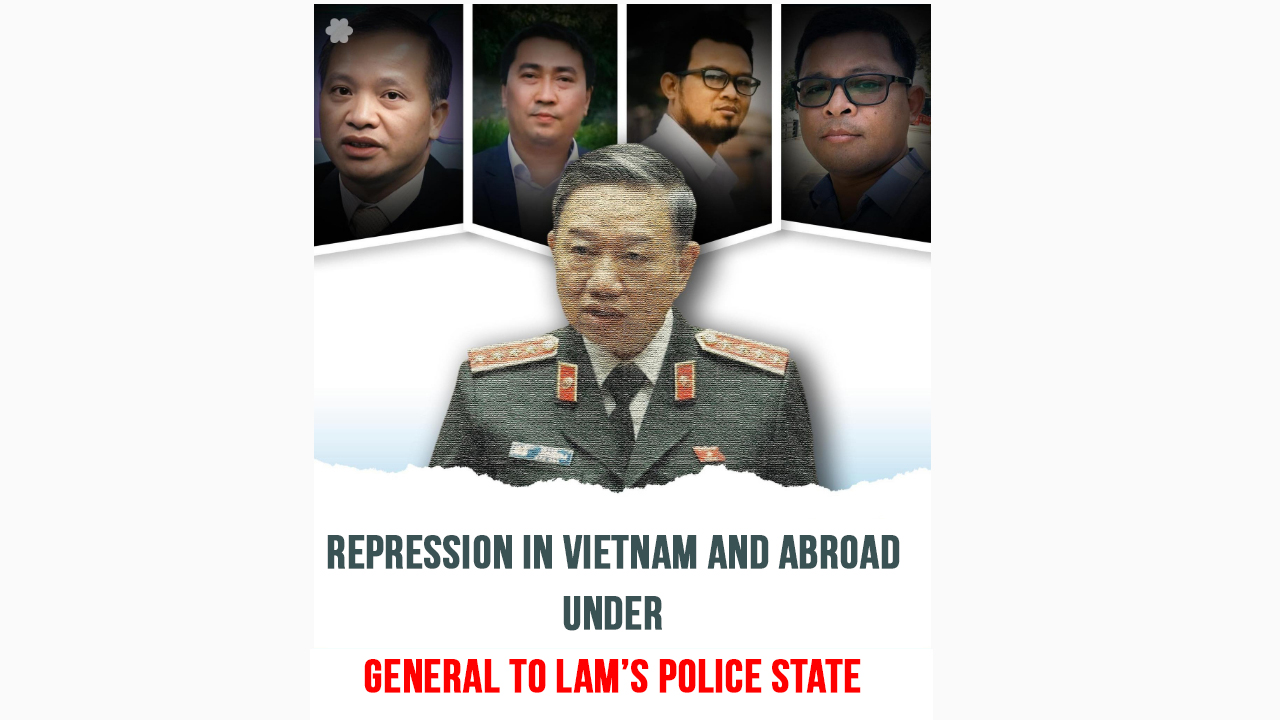
Over the past several years, Vietnamese authorities have increasingly extended their mechanisms of control and repression far beyond the country’s borders. After unleashing an unprecedented wave of repression against citizen journalists, human rights defenders, and dissident voices inside Vietnam, the communist regime, under the leadership of General To Lam, is intensifying its actions against activists and opponents living abroad.
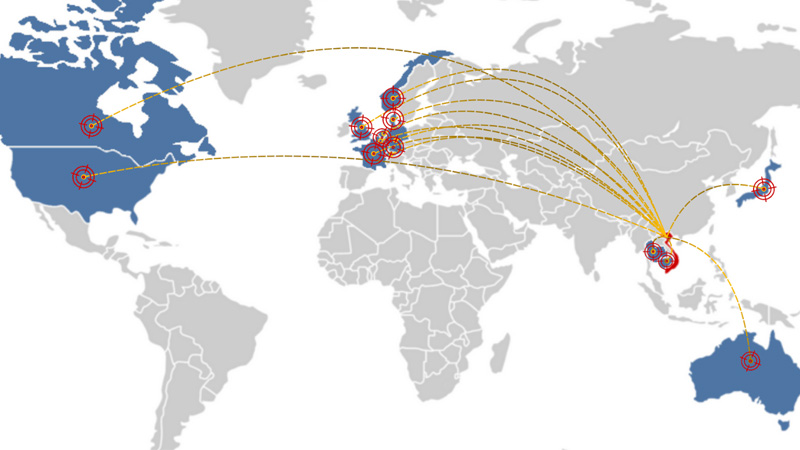
This development marks a new phase in Hanoi’s security strategy: repression is no longer confined to Vietnamese territory, but increasingly targets political exiles, refugees, bloggers, human rights defenders, and members of the Vietnamese diaspora residing in democratic countries. Through a wide range of methods — including intimidation, surveillance, cyberattacks, administrative harassment, diplomatic pressure, and reprisals against family members — the Vietnamese authorities seek to silence critical voices, deter political activism in exile, and maintain a climate of fear within overseas Vietnamese communities.
This document examines ten distinct forms of transnational repression conducted by Hanoi. Each practice is illustrated through documented cases, highlighting the scale, sophistication, and evolving nature of the tactics used by authorities against individuals living outside Vietnam.
Based on international criteria, the ten categories analyzed in this report include:
- Kidnapping, rendition, and death threats
- Direct threats and surveillance abroad
- Legal threats, including the misuse of INTERPOL or fabricated criminal charges
- Intimidation and harassment targeting members of the diaspora visiting Vietnam
- Harassment or punishment of family members remaining in Vietnam
- Digital threats, including hacking, spyware, leaks, and doxxing
- Pressure exerted through embassies, Vietnamese government officials, or pro-regime diaspora networks
- The refusal or conditional issuance of passports and administrative documents
- State-directed sabotage of refugee and asylum procedures
- Smear campaigns conducted through state-controlled media and social media platforms.
This analysis seeks to contribute to a better understanding of the Vietnamese government’s transnational repression practices and the consequences for fundamental rights, the safety of political exiles, and the integrity of democratic spaces in host countries.
Background on Vietnam
Vietnam has experienced rapid economic growth and increasing integration into the global economy. The country attracts significant foreign investment thanks to its abundant resources, strategic location, and low cost and resourceful labor force. However, economic liberalization has not been accompanied by any genuine political opening. Behind the image of a dynamic country remains an authoritarian system entirely controlled by the Vietnamese Communist Party (VCP), the only political party allowed to exist. No legal political opposition is tolerated, elections are neither free nor open, and the judiciary remains subordinated to the interests of the ruling party.
The contrast is particularly striking in the social sphere. Under Vietnam’s state capitalism, workers are denied worker rights. Independent labor unions are prohibited, and attempts to organize are repressed. Citizens who document corruption, forced land seizures, environmental abuses, or violations of fundamental rights expose themselves to arbitrary arrests, smear campaigns, and heavy prison sentences. Bloggers, human rights defenders, environmental activists, and religious leaders deemed critical of the regime are prosecuted under vague provisions of the penal code relating to “anti-state propaganda” or “abusing democratic freedoms.” In recent years, prison sentences against activists have become increasingly severe. Whereas dissidents were previously sentenced to a few years in prison, Vietnamese authorities regularly impose sentences of ten years or more for peaceful activities linked to freedom of expression or association.
Repression has also expanded to social media. In Vietnam, simply sharing, commenting on, or even “liking” a post critical of the regime can sometimes lead to police summons, interrogations, or even criminal prosecution. The authorities closely monitor Facebook, YouTube, TikTok, and other digital platforms in order to identify critical voices and suppress dissenting opinions. Vietnamese government agencies compel Facebook, YouTube and X to geo-block content deemed critical of the regime, especially when the posts mention senior communist leaders.
This repression intensified considerably after General To Lam became Minister of Public Security in 2016. Under his authority, the ministry developed a far more aggressive and pervasive security apparatus. Digital surveillance increased, arrests of activists multiplied, and prison sentences handed down to dissidents became harsher. The authorities no longer target only traditional political dissidents: environmental activists, independent experts, lawyers, religious representatives, and ordinary citizens expressing opinions that diverge from the official party line have also become targets. Several prominent figures within Vietnamese civil society have been imprisoned in recent years after denouncing corruption, environmental destruction, or the absence of fundamental freedoms.
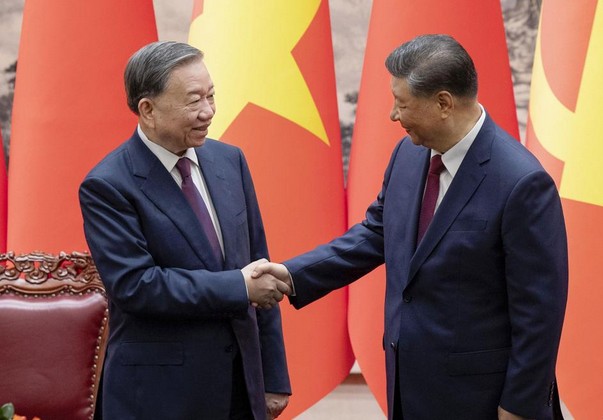
The situation has become even more alarming since To Lam rose to the position of General Secretary of the VCP, the most powerful office in the regime, while also serving as President of the country. This concentration of power has reinforced the personalization of the security apparatus and accelerated Vietnam’s transformation into a de facto police state. Many key positions are now occupied by officials originating from the security forces, including police generals Luong Tam Quang and Nguyen Duy Ngoc, both of whom have been promoted to the Politburo, the highest decision-making body of the Vietnamese Communist Party. The growing influence of security officials demonstrates that maintaining political control and regime security has become the overriding priority, far above the rule of law.
The career path of To An Xo is particularly illustrative of the fusion between the security apparatus, diplomacy, and propaganda. In the early 2000s, he was stationed in New York and Washington, D.C. under the cover of being a journalist for the Vietnam News Agency. He was later appointed Vietnamese consul in Houston around 2014 before returning to Vietnam in 2017, where he held the rank of lieutenant general and was spokesperson and chief of staff at the Ministry of Public Security (then headed by To Lam). When To Lam first became state president in 2024 and then general secretary, To An Xo joined him as a principal advisor and chief of staff. Such a trajectory reveals how the regime uses certain diplomatic and media positions as instruments connected to intelligence and security activities.
Despite its international commitments and its desire to present itself as a reliable economic partner, the Vietnamese government continues to systematically violate fundamental freedoms. The absence of political pluralism, the subordination of the judiciary to the Communist Party, the use of the police as an instrument of political control, and the expansion of transnational repression demonstrate that the Vietnamese regime is evolving toward an increasingly authoritarian model. Behind the country’s economic pictures lies a much darker reality: a state where freedom of expression, freedom of association, and civil rights remain severely repressed.
Concrete cases
To illustrate the nature of Vietnamese transnational repression, we document the stories of 13 victims of transnational repression. These cases fall into the ten categories of transnational repression perpetrated by the Vietnamese government (listed in the introduction). Some well-known cases are not documented in this report, such as Truong Duy Nhat or Thai Van Duong, because they already fall under the category of Kidnapping, rendition, or death threats, which is illustrated by the case of Trinh Xuan Thanh.
| Victim | Citizenship | Occurrence | How | |
| Trinh Xuan Thanh | Vietnam | Germany, 2017 | 1. Kidnapping, rendition, or death threats | |
| Y Quynh Bdap | Vietnam | Thailand, 2025 | 1. Kidnapping, rendition, or death threats
9. State-directed sabotage refugee’s asylum procedures |
|
| Nguyen Ngoc Duc | France | Cambodia, 2017 | 2. Direct threats or surveillance abroad | |
| Le Trung Khoa | Germany | Germany, 2025 | 2. Direct threats or surveillance abroad
6. Digital threats: hacking, spyware, leaks, doxxing |
|
| Nguyen Van Dai | Vietnam | Germany, 2025 | 2. Direct threats or surveillance abroad
6. Digital threats: hacking, spyware, leaks, doxxing |
|
| Nguyen Van Trang | Switzerland | Thailand &
Switzerland, 2018→ |
2. Direct threats or surveillance abroad
5. Harassment or punishment of family members in the home country 6. Digital threats: hacking, spyware, leaks, doxxing |
|
| Nguyen Dinh Thang | USA | USA, 2026 | 3. Legal threats: misuse of INTERPOL/ASEANPOL or fabricated criminal cases | |
| Pham Thi Lan | Australia | Vietnam, 2026 | 4. Direct threats and harassment to members of the diaspora visiting Vietnam | |
| John Doe 1 (anonymous) | Denmark | Vietnam, 2024 | 4. Direct threats and harassment to members of the diaspora visiting Vietnam | |
| John Doe 2 (anonymous) | United Kingdom | Vietnam, 2025 | 5. Harassment or punishment of family members in the home country | |
| John Doe 3 (anonymous) | Europe | 2025,
Europe |
7. Pressuring exiled persons through embassies/Vietnamese government officials, or diaspora loyalists | |
| Dang Thi Hue | Germany | Thailand/ Germany, 2025 | 6. Digital threats: hacking, spyware, leaks, doxxing
10. Smear campaigns on state media and social media platform |
|
| Le Chi Thanh | Vietnam | Thailand, 2026 | 8. Refusal to issue or renew passports or conditioning documentation on coercive ‘quid pro quo’ demands | |
Trinh Xuan Thanh, Berlin, 2017

Case Profile: Former Vietnamese politician and oil executive Trinh Xuan Thanh was abducted in broad daylight from Berlin’s Tiergarten park by Vietnamese intelligence agents in 2017
TNR Category: 1. Kidnapping, rendition, and death threats
Host Country: Germany
Year occurred: 2017
Citizenship: Vietnamese
Area of Activism: None
Status: Imprisoned in Vietnam with a life imprisonment sentence
Summary
The abduction of Trinh Xuan Thanh in Berlin in July 2017 remains the internationally documented case of Vietnamese transnational repression. At the time, Trinh Xuan Thanh, a former Vietnamese state enterprise executive and Communist Party official, was residing in Germany and seeking asylum. On 23 July 2017, he was forcibly abducted in broad daylight from Berlin’s Tiergarten Park by individuals later identified by German authorities as members of the Vietnamese intelligence services and their accomplices.
The German government publicly condemned the operation as a grave violation of German sovereignty and international law. German prosecutors concluded that the kidnapping had been organized by Vietnamese intelligence operatives with support from personnel linked to the Vietnamese Embassy in Berlin. Several participants were subsequently prosecuted in Germany for espionage and assisting in the abduction. In 2018, a Berlin court sentenced one accomplice to three years and ten months in prison for acting on behalf of Vietnamese intelligence and facilitating the kidnapping operation. German authorities described the kidnapping as a blatant violation of the rule of law and of Germany’s territorial sovereignty.
Numerous media investigations, judicial proceedings, and later criminal cases linked the operation to the highest levels of the Vietnamese security apparatus. The operation took place while General To Lam, who later became Minister of Public Security and subsequently President of Vietnam, was overseeing the Ministry of Public Security.
Following his abduction, Trinh Xuan Thanh reappeared in Vietnam and was presented by state media as having voluntarily returned to surrender to the authorities, a claim rejected by Germany and widely disputed by international observers. He was subsequently prosecuted in several corruption-related trials and sentenced to life imprisonment. He remains incarcerated in Vietnam.
Y Quynh Bdap, Bangkok, 2025
Case Profile: UNHCR-recognized refugee Y Quynh Bdap extradited to Vietnam from Thailand
TNR Category: Kidnapping, rendition, and death threats
Host Country: Thailand
Year occurred: 2025
Citizenship: Vietnamese
Area of Activism: Indigenous rights and religious freedom
Status: Imprisoned in Vietnam with a 10 years prison sentence
Summary
In November 2025, Montagnard activist Y Quynh Bdap was forcibly extradited from Thailand to Vietnam. Although formally presented as an administrative measure, the deportation occurred in a context of persistent political pressure reportedly exerted by Hanoi on Thai authorities. The case raises serious concerns regarding compliance with the principle of non-refoulement and international refugee protection standards.
Y Quynh Bdap, co-founder of the non-violent organisation Montagnards Stand for Justice, had been a UN recognized refugee in Thailand since 2019 and in process for resettlement to a third country at the time of his extradition. Unjustly accused of participation in attacks on government buildings in Dak Lak in 2023, Bdap was tried and sentenced to ten years imprisonment in absentia in January 2024 in a mass trial of nearly 100 people that raised serious fair trial concerns.
The Thai Immigration police arrested Bdap on June 11, 2024, a day after meeting with Canadian representatives at the embassy about his asylum application, following an extradition request by Vietnam. The Bangkok Criminal Court found sufficient grounds for an extradition in September 2024, a decision upheld by the Court of Appeal on 26 November 2025. Bdap’s family and legal representative weren’t able to confirm his whereabouts for days until his extradition on 28 November 2026 was confirmed on 29 November 2026.
Independent human rights experts, including several UN special rapporteurs, consider that the extradition of Bdap constitutes a violation of Thai anti-torture law and their international obligations. Y Quynh Bdap is currently serving a 10-year prison sentence in Vietnam.
Nguyen Ngoc Duc, Phnom Penh, 2017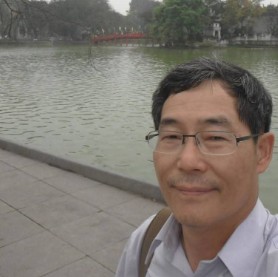
Case Profile: French citizen Nguyen Ngoc Duc and senior Viet Tan leader was attacked with acid in Cambodia in 2017
TNR Category: Direct threats and surveillance abroad
Host Country: France (Cambodia)
Citizenship: French
Area of Activism: democracy and political freedom rights
Status: in continuous treatment in France
Summary
The case of Nguyen Ngoc Duc, a French citizen and senior Viet Tan leader, illustrates the sophisticated and intimidating nature of transnational repression targeting Vietnamese dissidents abroad. On Vietnam’s National Day September 2, 2017 Nguyen Ngoc Duc and several other Vietnamese activists were the victims of an acid attack in Cambodia. The symbolic timing of the assault strongly suggests that the attack was not random, but rather politically motivated and intended as a warning to pro-democracy activists opposing the Vietnamese communist regime. The attack caused serious injuries and forced the victims to seek urgent medical treatment in Cambodia.
 The intimidation reportedly continued even after the assault. While hospitalized in Cambodia, Nguyen Ngoc Duc was approached by an individual claiming to have been sent by his French insurance company. The man requested permission to photograph his entire body, allegedly for insurance purposes. However, after returning to France, Nguyen Ngoc Duc discovered that his insurance company had never sent anyone to the hospital. The individual’s real objective appeared to be documenting the physical consequences of the attack as a “damage assessment” on behalf of those responsible.
Days later, Nguyen Ngoc Duc reportedly received a text message from a Vietnamese phone number claiming that the acid attack had been ordered by another member of Viet Tan. This type of disinformation operation aims to sow distrust, suspicion, and internal divisions within opposition networks abroad. Taken together, the attack, the suspicious hospital visit, and the subsequent manipulation attempt reflect a broader pattern of psychological intimidation and covert harassment frequently associated with Vietnamese transnational repression activities.
Le Trung Khoa, Berlin, ongoing since 2017
Case Profile: Germany-based journalist and newsagency Thoibao.de founder Le Trung Khoa sentenced in absentia to 17 years in prison by a Vietnamese court.
TNR Category: Direct threats and surveillance abroad
Year occured: 2025
Host Country: Germany
Citizenship: German
Area of Activism: Journalism
Status: In exile, under the protection of German police
Summary
Founder of the independent media outlet Thoibao.de, Lê Trung Khoa has for many years reported on corruption, political repression, and internal power struggles within the Vietnamese regime. He gained international recognition in 2017 as the first journalist to report on the abduction of Trịnh Xuân Thanh in Berlin by Vietnamese agents, a case that triggered a major diplomatic crisis between Germany and Vietnam.
Since then, Lê Trung Khoa has reportedly been subjected to sustained threats and pressure linked to his journalistic activities. In December 2025, Vietnamese authorities tried him in absentia and sentenced him to 17 years in prison for “propaganda against the government”, an accusation frequently used to silence activists inside the country. Despite the fact that he is now a German citizen, the Vietnamese government officially requested that German authorities arrest and deport him to Vietnam. The request was widely viewed by observers and human rights advocates as an attempt to extend Vietnamese political repression onto German territory and to intimidate exiled journalists critical of the regime.
Due to credible security concerns, Lê Trung Khoa currently lives under permanent police protection. His case illustrates the extent to which the Vietnamese government is prepared to target dissident journalists abroad through judicial harassment, diplomatic pressure, and intimidation measures, even when those individuals have obtained citizenship and legal protection in democratic states. It also demonstrates the long-term risks faced by journalists who expose sensitive operations carried out by the Vietnamese security apparatus overseas.
Nguyen Van Dai, Berlin, ongoing since 2023
Case Profile: Exiled human rights lawyer Nguyen Van Dai sentenced in absentia to 17 years in prison by a Vietnamese court.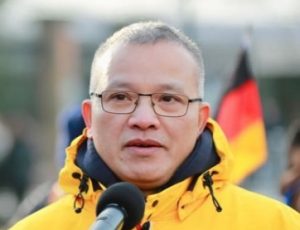
TNR Category: Direct threats and surveillance abroad
Year occured: 2025
Host Country: Germany
Citizenship: Vietnamese
Area of Activism: human rights, democracy and political freedom rights
Status: Under the protection of German police
Summary
A well-known human rights attorney and co-founder of the Brotherhood for Democracy, Nguyễn Văn Đài has long been one of the most prominent pro-democracy voices in Vietnam. In 2015 Dai was arrested while attempting to meet with EU delegates for the annual EU-Vietnam Human Rights Dialogue. Held in incommunicado for two and a half years, serving his pre- and post-trial detention under harsh conditions, Dai was finally sentenced in 2018 to 15 years in prison and five years of house arrest on charges related to “activities aimed at overthrowing the state.” In June 2018 Germany was released into exile to Germany.
However, exile did not end the Vietnamese authorities’ campaign against him. In December 2025, Nguyễn Văn Đài was tried again, this time in absentia, by Vietnamese courts and sentenced to17 years in prison for “propaganda against the government”, an accusation frequently used to silence activists inside the country. This new sentence is cumulative with his previous 15-year sentence, meaning that Vietnamese authorities continue to treat him as a long-term political target despite his removal from the country years earlier. The decision was widely perceived as both a punitive measure and a warning directed at exiled activists who continue their advocacy work from abroad.
Unlike Lê Trung Khoa, Nguyễn Văn Đài is not yet a German citizen, making his situation particularly concerning in the context of Vietnam’s growing pattern of transnational repression. Due to credible security risks, German police authorities reportedly provide him with a direct emergency contact allowing him to immediately alert both local and federal police services in the event of suspicious activity or threats against him. His case reflects the persistent insecurity faced by Vietnamese dissidents in exile and the concern among European authorities regarding the potential reach of Vietnamese security operations abroad.
Nguyen Van Trang, Phnom Penh, Zurich, ongoing since 2017
Case Profile: Exiled activist Nguyen Van Trang was attacked by acid in Phnom Penh in 2017, and continuously targeted in exile 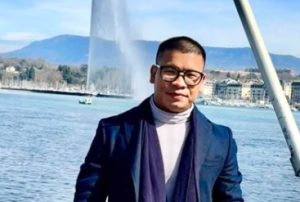
TNR Category: Direct threats or surveillance abroad, Harassment or punishment of family members in the home country, Digital threats: hacking, spyware, leaks, doxxing
Year occured: since 2017, ongoing
Host Country: Switzerland
Citizenship: Vietnamese
Area of Activism: human rights, democracy and political freedom rights
Status: In exile
Nguyen Van Trang is a Vietnamese pro-democracy activist and member of the Brotherhood for Democracy. Before obtaining asylum, he was attacked by acid in Phnom Penh, Cambodia, in 2017 together with fellow activist Nguyen Ngoc Duc. Because of his peaceful political activities, he was subjected to persecution in Vietnam and was granted refugee protection in Switzerland.
Since receiving protection, Nguyen Van Trang has participated in international advocacy efforts on human rights, freedom of expression. Following these activities, he is facing himself with a series of pressure tactics that raise concerns about the reach of Vietnamese authorities beyond their borders.
These measures have included online harassment and defamation campaigns carried out through websites and social media accounts supportive of the Vietnamese government. The content published about him has included personal attacks, political smears, and misrepresentations of his human rights work, apparently aimed at discrediting and intimidating him.
In November 2025, An Ninh TV, a media outlet affiliated with Vietnam’s Ministry of Public Security, rebroadcast a wanted notice originally issued against Mr. Nguyen Van Trang in 2018, despite the absence of any publicly announced new legal developments. The timing coincided with his participation in international human rights advocacy, including appearances before policymakers and international audiences.
Pressure has also reportedly been directed at his relatives in Vietnam. Security officials have repeatedly visited family members, sought information about his activities, and urged them to persuade him to return to Vietnam. Since 2025, his family has received two official documents calling on him to surrender, warning that he would face “strict handling in accordance with the law” if he refused.
In addition, Mr. Nguyen Van Trang was warned by a Swiss citizen of Vietnamese origin that personnel associated with the Vietnamese Embassy in Switzerland had allegedly sought personal information about him, including his address, employment, and contact details. According to the information received, providing such information was presented as potentially helpful in obtaining a visa to Vietnam.
While no physical attacks have been reported in Switzerland, the combination of online harassment, public targeting by state-affiliated media, pressure on family members, surrender demands, and reported attempts to gather personal information suggests a pattern of transnational repression extending beyond Vietnam’s borders. These actions raise serious concerns for the safety and freedom of Vietnamese refugees and activists living abroad.
Nguyen Dinh Thang, USA, ongoing since 2026
Case Profile: US-based activist and BPSOS President Dr. Nguyen Dinh Thang sentenced in absentia to 11 years in prison by a Vietnamese court on fabricated terrorism charges.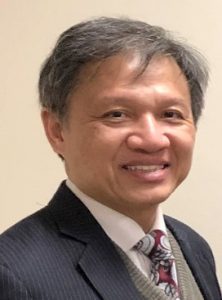
TNR Category: Legal threats: misuse of INTERPOL/ASEANPOL or fabricated criminal cases
Host Country: USA
Year occurred: 2026
Citizenship: US
Area of Activism: Freedom of Religion and Believe
Status: Sentenced in absentia by a Vietnamese court; currently residing in the United States.
Summary:
Dr. Nguyen Dinh Thang is a US citizen and President of Boat People SOS (BPSOS), a Virginia-based human rights organization. On April 28, 2026, a court in Dak Lak Province, Vietnam, tried Dr. Thang in absentia and sentenced him to 11 years in prison under Article 299 of the Penal Code. The Vietnamese government fabricated terrorism charges against him, falsely claiming that he used BPSOS to fund and direct indigenous rights groups involved in the 2023 Dak Lak unrest. Leading international human rights groups have strongly condemned the verdict as politically motivated retaliation.
This case is a severe example of long-arm judicial abuse, where an authoritarian regime uses its domestic courts to criminalize and target a foreign citizen living safely overseas. The harsh sentence is direct retaliation for Dr. Thang’s global human rights advocacy, specifically his efforts to protect persecuted religious minorities and his work defending Y Quynh Bdap, a Montagnard refugee who was forcibly extradited from Thailand to Vietnam. By issuing this sentence, Hanoi aims to intimidate the international community and scare NGOs into stopping their documentation of human rights abuses inside Vietnam.
Pham Thi Lan, Vietnam/Australia, 2014-2017
Case Profile: Teacher in Vietnam fled to Thailand in 2017, in asylum and became an Australian citizen in 2023. Her family in Vietnam continues to face threats to their financial stability and constant harassment since her activism.
TNR Category: Direct threats or surveillance abroad, Harassment or punishment of family members in the home country
Host Country: Australia
Year occurred: 2014
Citizenship: Australian
Area of Activism: Blogging of memoirs, Civil rights, Democracy advocate
Status: In exile in Australia
Summary:
Pham Thi Lan (also known as blogger Moc Lan) began blogging her memoirs as a teacher in 2014. This caught the attention of her school and security police who both harassed her and her extended family till this day. She joined the Brotherhood for Democracy in 2014, and is now a senior member. In 2017, she fled to Thailand looking for refuge. She had to leave behind her family, including her only son.
From 2017, attempts were made to track her down through her home village. The village loudspeakers would make it known twice a day that she was a wanted and dangerous criminal. Her family were constantly called up for questioning leading to emotional and physical distress. Surveillance and threats continued into 2018 especially during Lunar New Year and other events. From 2019, her family and extended families began experiencing difficulties trying to make a living as their workplaces would be harassed which continues even now.
In May 2025, threats were made to her mother that she could be kidnapped the way they had done with Trinh Xuan Thanh if Lan continued what she was doing abroad. Her sister and brother began to face legal battles concerning tax and legal charges. Even her former partner’s family would be called in for questioning as recently as April 2026.
Meanwhile from Thailand, she then made her way to Australia and applied for asylum in November, 2018. She was granted Permanent Residency in 2021 and Citizenship in 2023 to Australia. To this day, her family in Vietnam continues to face threats to their financial stability and constant harassment.
John Doe 1, Denmark, 2024
Case Profile: Danish citizen arbitrarily detained for 11 hours in Vietnam, passport confiscated, interrogated, and forcibly deported back to Denmark over peaceful assembly photo.
TNR Category: Direct threats and harassment to members of the diaspora visiting Vietnam
Host Country: Denmark
Year occurred: 2024
Citizenship: Danish
Area of Activism: Vietnamese diaspora community activities
Status: Denied entry and banned from Vietnam
Summary
John Doe, a Danish citizen, was stopped at the border control upon entering Vietnam. The individual was taken to an immigration department room, and subjected to a six-hour interrogation by security officers.
Authorities accused the Danish citizen of belonging to Viet Tan, a pro-democracy group labeled as a terrorist organization by Hanoi. As “evidence” officers produced surveillance photos of the individual attending a peaceful protest in Denmark.
Despite denying the accusations, the individual was held for an additional five hours, had his passport confiscated by an officer who initially lied about possessing it, and was forcibly deported and escorted back to Denmark.
This case vividly illustrates Vietnam’s use of cross-border surveillance and mobility controls against foreign nationals. By monitoring a peaceful political demonstration taking place thousands of miles away on the streets of Denmark, the Vietnamese regime demonstrated its capacity to track the diaspora globally. The state then weaponized this intelligence at its border to deny entry, interrogate, and deport a European citizen for exercising their right to free speech and assembly abroad. This tactic functions as a severe form of intimidation, signaling to diaspora youth that participating in civic or cultural events in their home countries carries the risk of arbitrary detention and targeting if they ever attempt to visit Vietnam.
John Doe 2, United Kingdom, 2025
Case Profile: Harassment against family of a human rights activist living in the UK
TNR Category: Harassment or punishment of family members in the home country
Host Country: UK
Year occurred:
Citizenship: Vietnamese
Area of Activism: Human rights
Summary
John Doe 2 participated in a public demonstration in the United Kingdom on 4 May 2025 commemorating the fall of Saigon on 30 April 1975. The event was attended by a large number of participants and constituted a peaceful exercise of freedom of expression and assembly.
Following the demonstration, social media accounts based in Vietnam published photographs of John Doe 2 taken during the event. These accounts also shared photographs of his wife and children, who reside in Vietnam. The images were used in online campaigns aimed at stigmatizing, defaming, and intimidating the family. Posts encouraged public condemnation, social boycott, and harassment of John Doe and his relatives.
The repercussions extended beyond social media. According to the testimony, teachers at his children’s school circulated photographs of John Doe 2 participating in the demonstration, along with photographs of his wife and children, and described the family as being opposed to the Vietnamese state. As a result, his children were subjected to verbal abuse and physical assaults by fellow students. His wife also experienced significant pressure. She was reportedly ostracized and publicly insulted within her local community. In addition, she was summoned by local police for questioning, which the family perceived as an attempt to intimidate them because of John Doe’s participation in a political demonstration abroad.
Several influential social media personalities in Vietnam further amplified the campaign by publishing posts about the family, contributing to a climate of hostility, public shaming, and intimidation. The case demonstrates how an individual’s peaceful participation in a public demonstration outside Vietnam can result in reprisals against family members residing within the country.
Apart from John Doe, several other families report similar events.This case illustrates a pattern of transnational repression whereby activities lawfully conducted abroad are followed by harassment, intimidation, and pressure directed at relatives remaining in Vietnam.
John Doe 3, Europe, 2025
Case Profile: Access to visas is used as leverage to pressure an individual living abroad into acting as an informant against members of a diaspora community
TNR Category: Pressuring exiled persons through embassies/Vietnamese government officials, or diaspora loyalists
Host Country: Europe
Year occurred: 2025
Citizenship: European
Area of Activism: Vietnamese diaspora community activities
Status: Ongoing
Summary:
John Doe 3 is a European citizen born in Vietnam who has lived in Europe for several decades. He is a well-known figure within the Vietnamese diaspora and has been actively involved in community organizing for many years. He is married to a Vietnamese national who recently migrated to Europe. The couple travels to Vietnam on a regular basis to maintain family ties.
Seeking to facilitate these frequent visits, John Doe 3 contacted the Vietnamese embassy in his country of residence to apply for a long-term visa. According to his testimony, embassy officials informed him that the visa would only be granted if he agreed to provide information about members of the Vietnamese diaspora. The officials were reportedly particularly interested in activists, including individuals who had recently been resettled from Thailand.
The information requested included details regarding the activities of diaspora organizations as well as personal data concerning individuals perceived as critics of the Vietnamese government, including their addresses, telephone numbers, email addresses, occupations, and social networks. Embassy officials reportedly made clear that his application for a long-term visa would not be approved unless he cooperated.
John Doe 3 refused to provide the requested information. The pressure did not end there. During subsequent trips to Vietnam, local police repeatedly summoned him to attend so-called “working sessions.” During these meetings, officers allegedly questioned him about the Vietnamese diaspora in Europe and again encouraged him to cooperate by providing information about activists and community members abroad. The questioning focused on diaspora activities, networks, and individuals considered by the authorities to be opponents of the Vietnamese regime.
Dang Thi Hue, aka Hue Nhu, Germany, ongoing since 2024
Case Profile: Civil rights activist Dang Thi Hue targeted by Vietnamese requests to Interpol/Europol, while her family members in Vietnam faced ongoing police harassment.
TNR Category: 3. Legal threats: misuse of INTERPOL/ASEANPOL or fabricated criminal cases 5. Harassment or punishment of family members in the home country
Host Country: Germany
Year occurred: 2024, 2025, 2026
Citizenship: Vietnamese
Area of Activism: Civil rights, anti-corruption and freedom of expression
Status: In exile
Summary:
Dang Thi Hue, also known as blogger Hue Nhu, is a former teacher and labor rights advocate who has campaigned against corruption and in support of workers’ rights in Vietnam. In October 2019, she was arrested and later sentenced to three years and three months in prison on charges of “disturbing public order.” Following her release in 2023, she continued to speak out on social and political issues. After receiving warnings that she would face renewed arrest, she fled Vietnam and sought refuge in Thailand in May 2024.
Although recognized by UNHCR as a refugee in Thailand, Dang Thi Hue remained a target of Vietnamese authorities. On 24 October 2024, police officers searched her parents’ home in Vietnam, ostensibly looking for belongings linked to their daughter. The operation was recorded by security cameras installed at the family residence. The search occurred despite the fact that Dang Thi Hue had already been living outside Vietnam for several months.
Vietnamese authorities subsequently directed pressure toward her family members. In March and May 2025, police issued summonses ordering Dang Thi Hue to appear for questioning at a police station in Thai Binh Province. The authorities were fully aware that she was no longer residing in Vietnam. The summonses were delivered to her parents’ home, placing them under direct pressure and creating an atmosphere of intimidation. Such actions appear designed less to secure her attendance than to remind family members that they remained under official scrutiny because of their daughter’s activities.
In June 2025, Dang Thi Hue was granted political refugee status in Germany. Nevertheless, legal pressure from Vietnam continued to escalate. On 28 October 2025, police in Hung Yen Province issued an arrest warrant against her under Article 117 of the Vietnamese Penal Code, which criminalizes “propaganda against the State” and has frequently been used against journalists, bloggers, and peaceful government critics. The timing of the warrant, issued after she had already obtained refugee protection abroad, raises serious concerns that criminal proceedings were being used as a tool to pursue a political opponent beyond Vietnam’s borders.
The transnational dimension of the case became even more apparent on 9 April 2026, when German authorities informed Dang Thi Hue that Vietnam had formally requested her arrest and deportation from Germany. The request was rejected by the German authorities, who recognized her protected refugee status. Nonetheless, the attempt demonstrates the willingness of Vietnamese authorities to use international law-enforcement and judicial cooperation mechanisms to seek the return of a political refugee despite well-founded fears of persecution.
Reports of harassment have continued beyond formal legal measures. In May 2026, the owner of Dang Thi Hue’s rented apartment reportedly received repeated phone calls from a number appearing to be associated with the Vietnamese Consulate in Frankfurt. According to the owner, when the calls were answered, nobody spoke. While the purpose of these calls remains unclear, they contributed to an environment of intimidation surrounding her place of residence.
Since leaving Vietnam in May 2024, Dang Thi Hue has also been subjected to sustained online harassment. She has received large numbers of abusive and threatening messages on social media, while fabricated nude images created through artificial intelligence have been circulated online in an apparent attempt to discredit and humiliate her. The abuse has extended to her parents in Vietnam, who have also been targeted by insulting messages and online attacks. Taken together, the repeated police actions against her family, the issuance of criminal charges after her departure, the request for her arrest abroad, and the continuing campaign of intimidation suggest a pattern of transnational repression aimed at silencing a peaceful activist beyond Vietnam’s borders.
Le Chi Thanh, Thailand, 2026
Case Profile: Vietnamese authorities arbitrarily canceled Le Chi Thanh’s valid passport (originally set to expire in 2031) from abroad without prior notification. 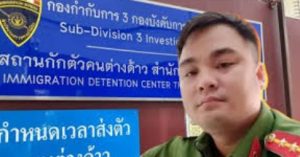
TNR Category: 8. The refusal or conditional issuance of passports and administrative documents
Host Country: Thailand
Citizenship: Vietnamese
Year occurred: 2026, March 6
Area of Activism: Anti-corruption; Police accountability; Freedom of expression
Status: Detained (Suan Phlu Immigration Detention Centre, Bangkok)
Summary
Lê Chí Thành is a Vietnamese anti-corruption activist and former police officer who used social media to expose misconduct within the public security sector. In April 2021, he was arrested following an encounter with traffic police in Thu Duc City and later sentenced to two years in prison for “resisting officers.” In January 2022, he received an additional three-year sentence under Article 331 of Vietnam’s Penal Code for Facebook posts criticizing authorities. He was reportedly subjected to ill-treatment in custody, released in 2025, and subsequently left Vietnam.
He lawfully entered Thailand using a valid Vietnamese passport set to expire in 2031 and later obtained a Thai work permit. However, in March 2026, Vietnamese authorities reportedly cancelled his passport without prior notice, invalidating his legal status. Shortly afterward, Thai immigration police arrested him and placed him in the Immigration Detention Center (IDC), where he faced possible deportation.
Incident Log
| Date | TNR Method | Description |
| Prior to March 6, 2026 | Passport cancellation leading to loss of legal status | Vietnamese authorities reportedly cancelled Lê Chí Thành’s passport without prior notice, which caused his visa to become invalid and left him without legal status in Thailand. |
| March 6, 2026 | Use of host-country immigration enforcement to arrest individuals | Thai immigration police arrested Le Chi Thanh at his home in Pathum Thani province and detained him at Suan Phlu Immigration Detention Centre in Bangkok. |
| March, 2026 | Use of origin-state embassy access to detainees in IDC | Vietnamese embassy personnel reportedly visited him while he was detained in the IDC. |
| Ongoing | Use of diplomatic pressure to facilitate deportation | Vietnamese authorities reportedly applied pressure on Thai authorities to facilitate his deportation to Vietnam. |
Recommendations
To Governments and Host States
- Publicly recognize Vietnamese transnational repression as an unacceptable threat to human rights, refugee protection, and national sovereignty and include it in all bilateral meetings with Vietnamese authorities.
- Strengthen protection mechanisms for Vietnamese dissidents, asylum seekers, journalists, and human rights defenders living in exile, particularly those identified as high-risk targets, including police protection and security assistance.
- Establish dedicated reporting mechanisms allowing targeted individuals to safely report threats, surveillance, harassment, or suspected foreign interference activities.
- Conduct criminal investigations into individuals, intermediaries, or organized networks suspected of acting on behalf of the Vietnamese authorities to intimidate, monitor, assault, or silence dissidents in host countries.
- Increase monitoring of unofficial pro-regime groups or individuals credibly suspected of coordinating intimidation campaigns against members of the Vietnamese diaspora on behalf of Hanoi.
- Refuse cooperation with politically motivated extradition requests or fabricated criminal accusations originating from the Vietnamese authorities.
- Increase scrutiny of requests and notices involving Vietnamese dissidents within mechanisms such as INTERPOL and regional police cooperation frameworks in order to prevent abuse for political purposes.
- Provide emergency visas, relocation pathways, or temporary protection measures for activists facing imminent threats in transit countries such as Thailand or Cambodia.
- Impose diplomatic consequences, targeted sanctions, or visa restrictions against Vietnamese officials credibly implicated in acts of transnational repression or human rights abuses abroad.
To International Organizations and Human Rights Mechanisms
- Encourage the United Nations, relevant Special Rapporteurs, and regional human rights bodies to systematically document and publicly report on Vietnamese transnational repression practices.
- Urge the Office of the United Nations High Commissioner for Refugees to reinforce protection mechanisms for Vietnamese refugees and asylum seekers facing cross-border threats.
- Develop international guidelines and accountability frameworks addressing state-led transnational repression, including the misuse of diplomatic missions and international policing systems.
- Facilitate information-sharing between governments, NGOs, journalists, and digital security experts regarding emerging Vietnamese transnational repression tactics.
To Technology Platforms and Digital Service Providers
- Investigate coordinated harassment, doxxing, spyware deployment, and disinformation campaigns linked to pro-government Vietnamese networks.
- Improve rapid response mechanisms for activists subjected to online death threats, impersonation campaigns, or coordinated digital attacks.
- Increase transparency regarding state-linked influence operations targeting Vietnamese diaspora communities.